Despite the great geographical distance between them, relations between South Korea and Chile have steadily expanded beyond the economic, diplomatic, and cultural spheres into the academic realm. In particular, the Korean language and the field of Korean studies have grown into a vital knowledge base underpinning these exchanges. For approximately 15 years since 2012, I have been working to establish Korean studies at the university level and cultivate the next generation of scholars in Chile, a country in Latin America considered underdeveloped in terms of Korean studies, and one with a particularly small Korean community. Looking back, this process has been a continuous series of challenges and achievements made possible by consistently leveraging support from Korean government agencies. In this paper, I aim to share the experiences and lessons learned from the growth of Korean studies at Universidad Central de Chile (UCEN), where the necessary infrastructure was built by utilizing support programs from the Academy of Korean Studies, the Korean Studies Promotion Service, the King Sejong Institute Foundation, the Korea Foundation (KF), and the National Library of Korea.
Building a Foundation for Sustainable Korean Studies
To ensure the growth and sustainability of Korean studies, it was necessary to institutionalize the field within the university’s regular education system. While ideally this would span from obtaining a bachelor’s degree to continuing master’s and doctoral studies, establishing an independent undergraduate major or department was impossible given the realities in Chile. Consequently, to align with the university’s restructuring of its graduate school in 2016, the establishment of a master’s degree program in Korean studies was proposed, and the strategy of cultivating the next generation of Korean studies scholars at the graduate level was adopted.
Launched in 2018, the Master’s Program in Korean Studies at UCEN is the only degree program of its kind in the country and has been in operation for nine years. To date, 124 students have been admitted, with 44 students receiving master’s degrees in Korean studies and 8 graduates subsequently pursuing doctoral studies. The program has laid the foundation for locally cultivating individuals capable of conducting research in Korean studies and has resulted in one doctoral degree recipient and two students who have completed their doctoral coursework.
<Figure 1> Welcome Ceremony for the Master’s Program in Korean Studies
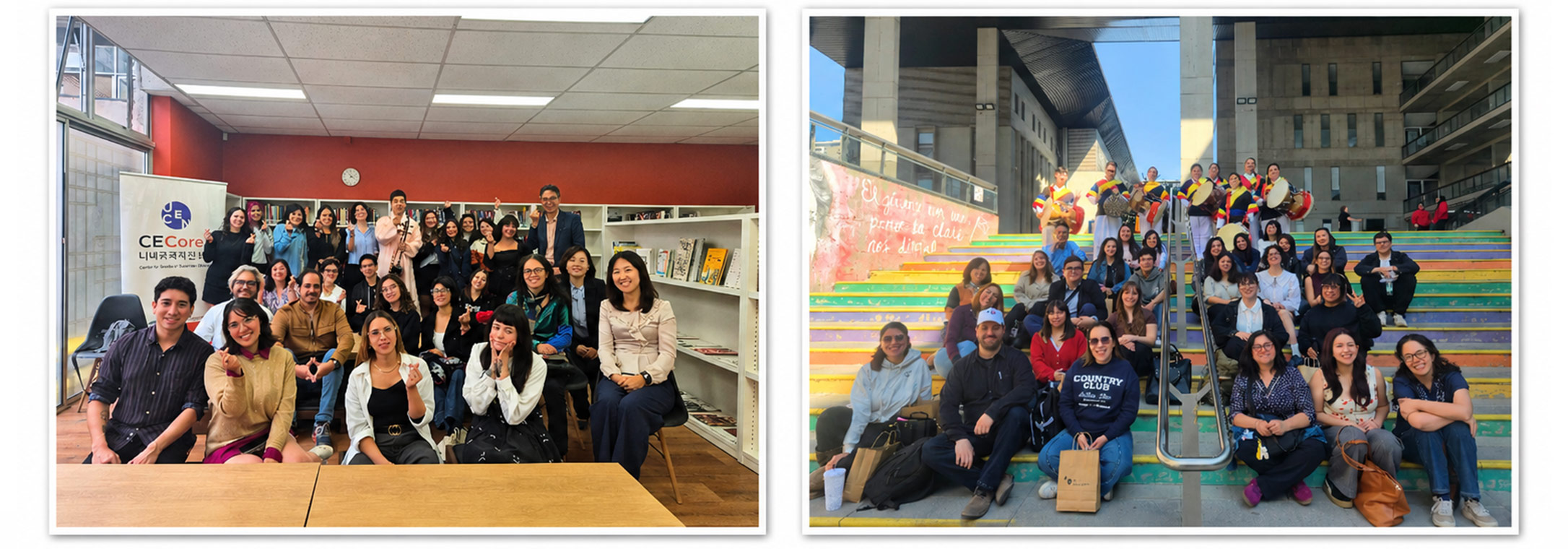
Description: Welcome Ceremony for the Master’s Program in Korean Studies. Students attending the welcome ceremonies in 2025 (left) and 2026 (right).
The Korean government’s support programs provided a crucial foundation for this initiative. Through the Seed Program for Korean Studies (2017–2020, 2020–2023) run by the Korean Studies Promotion Service, entrance scholarships were provided for the Master’s Program in Korean Studies, helping to create a stable academic environment. Additionally, one or two outstanding students each year were given the opportunity to conduct fieldwork in Korea. The KF Scholarship for Graduate Students also provides scholarships to two to three master’s students each year. Thanks to these achievements, the Master’s Program in Korean Studies received accreditation from the Comisión Nacional de Acreditación (National Accreditation Commission, CNA) of Chile in 2024, establishing it as a program whose educational quality is recognized both within the university and by the Chilean academic community, rather than remaining merely as an experimental program.
Establishing a foundation for Korean language education was also a key pillar supporting the development of Korean Studies. In November 2018, the university was designated as the sole operator of the King Sejong Institute in Chile; currently, approximately 200 students enroll in 12 to 15 courses each semester, and the cumulative number of students over the past eight years has reached about 2,500. The increase in the King Sejong Institute enrollment laid the groundwork for incorporating introductory Korean language and Korean studies courses into the regular undergraduate curriculum as credit-bearing courses. Master’s students in Korean studies can take Korean language classes at the King Sejong Institute free of charge, which has greatly contributed to strengthening their foundational Korean language skills.
Meanwhile, the lack of foundational materials on Korean studies in Spanish has been another hurdle in the development of Korean studies in Latin America. For master’s students who did not major in Korean studies as undergraduates, academic materials published in Asia or the English-speaking world were too advanced or specialized, while Korean government public diplomacy materials introducing Korea lacked the necessary academic or theoretical depth. The Seed Program for Korean Studies addressed this issue and resulted in the publication of three Spanish-language academic books that covered Korean history, introduced Korean society and culture, and outlined Korea–Chile relations. By providing Spanish-speaking students with materials that allow them to engage with Korea in their own academic language, these publications serve as a crucial foundation for the expansion and sustainability of Korean studies.
<Figure 2> Korean Studies Book Series
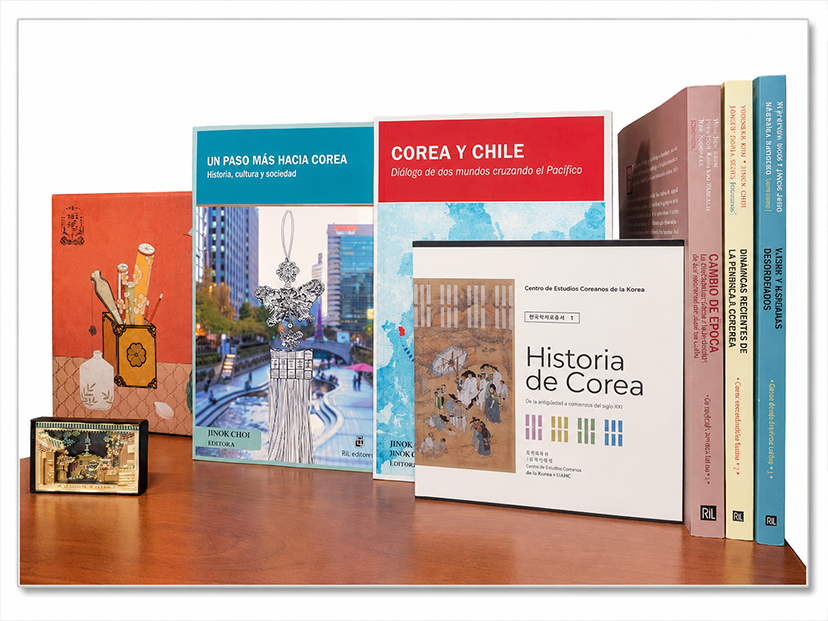
Description: Korean Studies Book Series, Corea desde América Latina (Korea from Latin America), published by the Centro de Estudios Comparados de Corea (Center for Comparative Studies of Korea, CECorea).
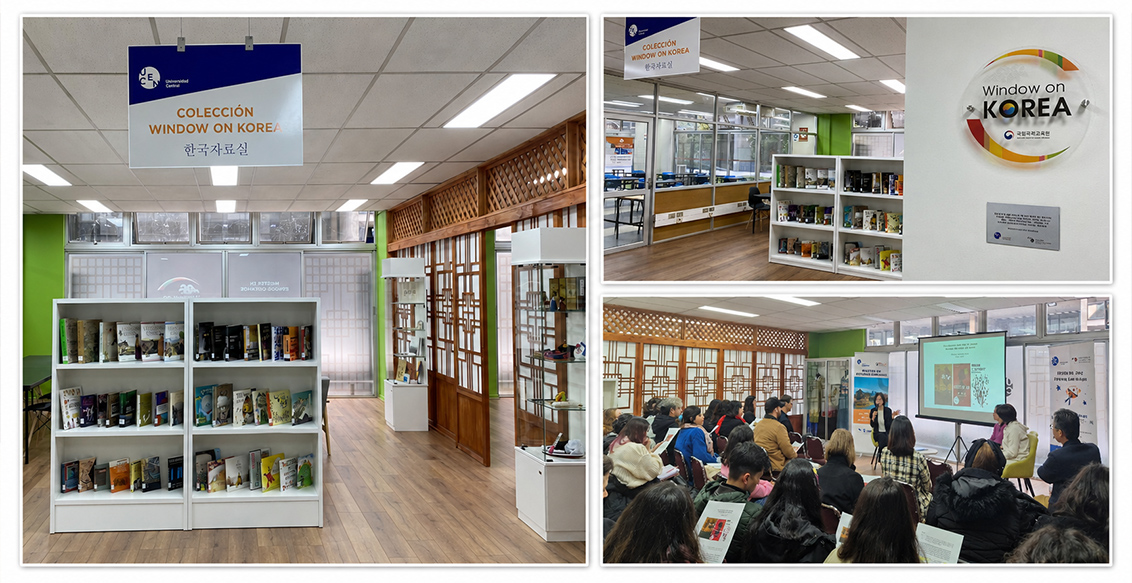
To further build educational and research infrastructure, the university newly opened Window on Korea (WOK) in 2024 in its library with support from the National Library of Korea. This Korean studies resource center is the 34th Window on Korea worldwide and the only one of its kind in South America. Housing over 3,000 volumes of materials related to Korea and Asia, it has significantly addressed the shortage of academic resources needed to deepen education and research in Korean studies.
<Figures 3> Window on Korea, a Korean resource center
Expansion Through Inter-Program Collaboration: To the Undergraduate Level, to Local Communities, and Across Latin America
For the various overseas Korean language and Korean studies support programs run by Korean government agencies to function effectively on the ground, it is essential to create synergies among these programs.
First, in order to sustain master’s programs in Korean studies, there is a growing need to promote Korean studies starting at the undergraduate level and foster future master’s students. Undergraduate students were therefore encouraged to explore Korea as a subject of study and a comparative case within their own majors.
To this end, three projects were linked and carried out through the International Support for Korean Studies program of the Academy of Korean Studies. First, in 2021, through the “Into Online Korean Studies: Development of Online Educational Content for Korean Studies in Spanish” project, an introductory course on Korean studies consisting of a total of 26 topics was produced and recorded in Spanish. This content helped to lower language barriers to Korean studies and expand the foundation for learning.
Based on this content, the “Korean Studies Throughout Chile” (Estudios Coreanos a lo largo de Chile) project was subsequently carried out in 2024. Online Korean studies courses were provided to undergraduate students at regional universities in Chile, and Korean studies camps were held for the students at participating universities. This project demonstrated the potential for the regional expansion of Korean studies through a hybrid educational model that combined online classes and in-person academic activities.
<Figure 4> Korean Studies Camp for University Students
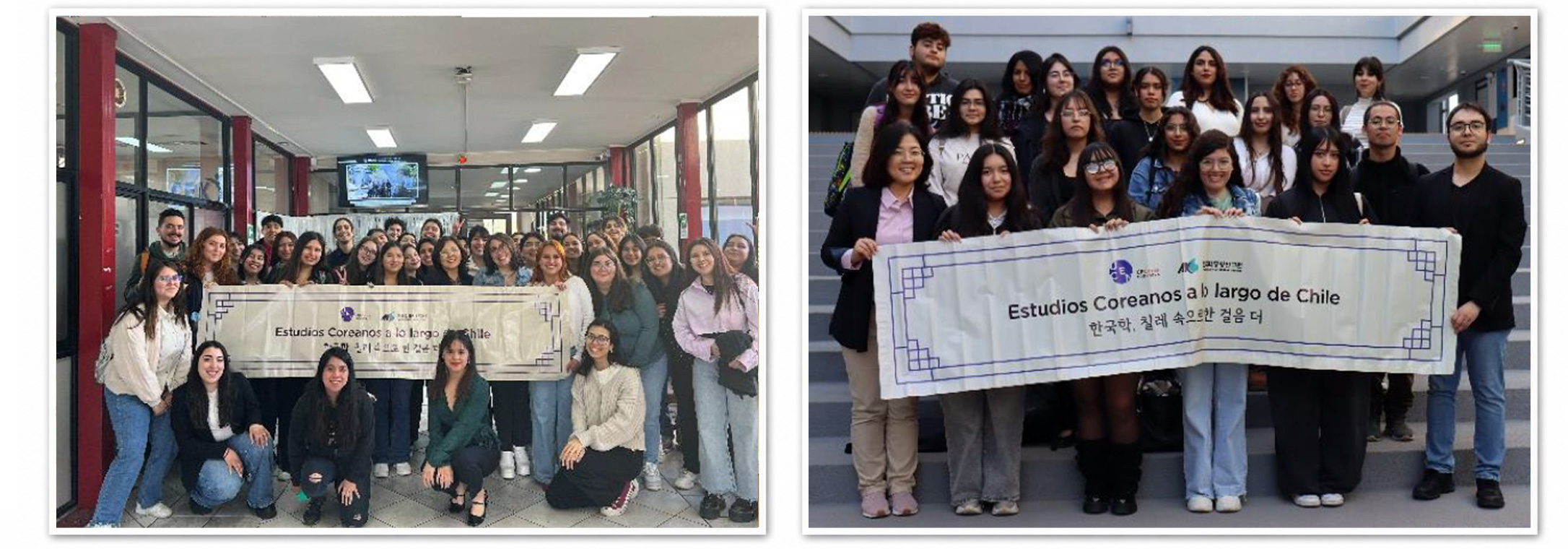
Description: Students from regional universities participating in the student camp as part of the “Korean Studies Throughout Chile” project in 2024.
Building on these achievements, the project “Korean Studies Throughout Chile: Expanding and Advancing Korean Studies in the Northern Macroregion “ (Estudios Coreanos a lo largo de Chile: Expansión y Desarrollo de los Estudios Coreanos en la Macrozona Norte) is currently underway since 2026, with a focus on strengthening the foundation of Korean studies at 10 universities in northern Chile. By leveraging UCEN’s sole regional campus in the northern city of La Serena, we are creating opportunities for students at universities across northern Chile to engage naturally with Korea through their own fields of study.
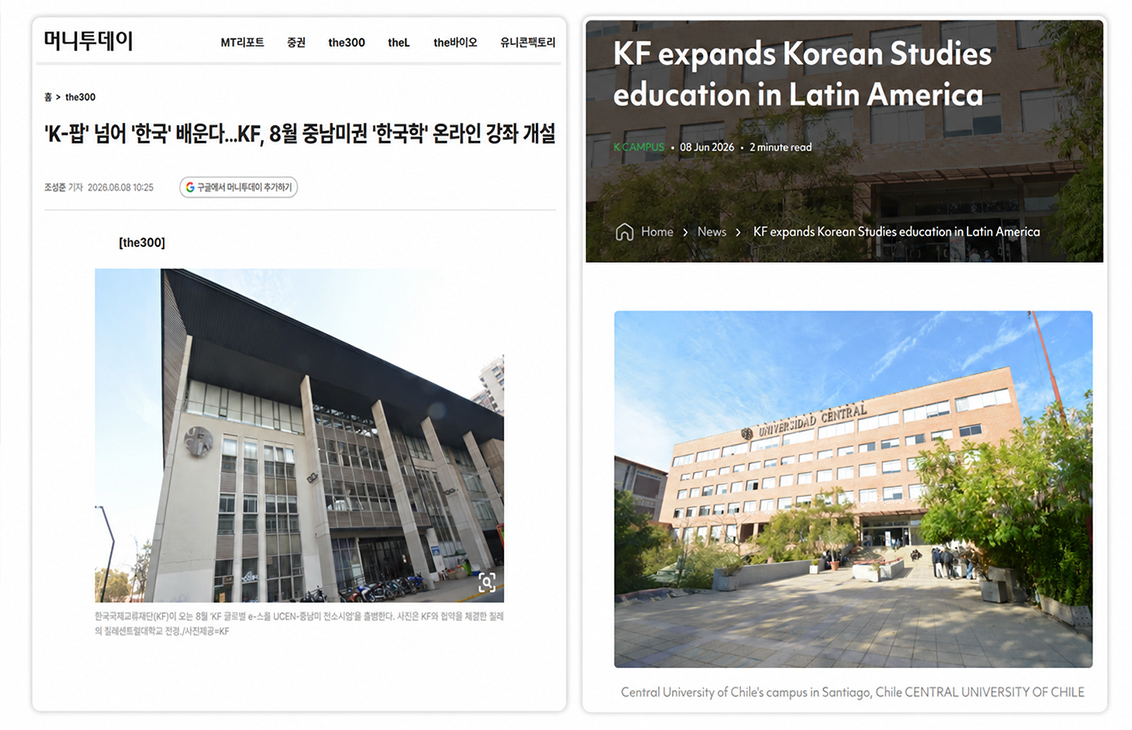
In May 2026, UCEN began spearheading and operating the KF Global e-School UCEN-Latin America Consortium for Korean Studies. This has made it possible to build a Korean studies network not only within Chile but throughout Latin America. UCEN was chosen as the lead institution of this consortium based on the establishment and consolidation of a Korean Studies infrastructure through the aforementioned projects the university has supported.
<Figure 5> Article on the launch of the KF Global e-School UCEN-Latin America Consortium for Korean Studies.
Localization of Korean Studies with an Emphasis on Comparative Research
To ensure the sustainability of Korean studies, the direction of its growth was just as important as building its infrastructure. Because the academic system in Chile, in particular, is rooted in European traditions, it was crucial to link this new field of area studies called Korean studies with the existing framework of academia to facilitate its integration. In other words, rather than establishing Korean studies as a new, separate academic discipline, the key was localization—embedding Korean studies in a robust academic system as an analytical framework and subject of comparison.
The decision to name the institute that opened in 2019 through the Seed Program for Korean Studies the Centro de Estudios Comparados de Corea (Center for Comparative Korean Studies, CECorea) was also made in this context. CECorea’s goal was to understand Korea through the experiences of Latin America and foster academic dialogue that would offer a fresh perspective on Latin American issues through the lens of Korea. A significant number of master’s theses involve comparative studies of the policies, institutions, social phenomena, and historical experiences of the two regions, demonstrating how Korean studies is closely linked to local academic concerns.
<Figure 6> Center for Comparative Studies of Korea (CECorea) Website
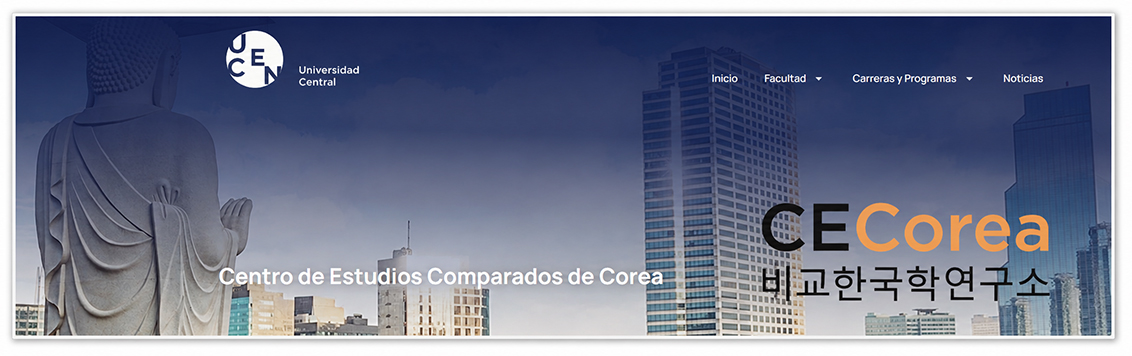
Description: The official website of the Centro de Estudios Comparados de Corea (CECorea) (https://cecorea.ucentral.cl), established in 2019 to foster academic dialogue.
The title of the Korean studies book series published by CECorea, Corea desde América Latina (Korea from Latin America), also reflects this philosophy. When conducting academic research projects, the institute focused on multilayered comparative and interrelated analyses of Korea and Chile across various thematic axes. Examples include the 2023 research projects “K-Pop, Cosmetics Industry, and Counter-Hegemonic Gender in Chile,” which was conducted with support from the AKS’s Korean Studies Promotion Program, and “Development of Cultural Industry Policy Models in Chile: Lessons from Korea,” which was carried out with support from the KF’s Policy Research Program.
Taking Another Step Forward
The development and sustainability of Korean studies abroad depend on establishing a foundation for local research and education to happen organically, continuously nurturing the next generation of Korean studies scholars, and building an academic ecosystem where they can thrive. To strengthen this local Korean studies ecosystem, the focus should now be on broadening the pathways for the next generation of locally trained Korean studies scholars to enter academia and providing them with long-term support. (Prof. Choi E-mail: jinok.choi@ucentral.cl)