
1. 2026 Educational Collaboration with the 35th Annual Conference of the World History Association
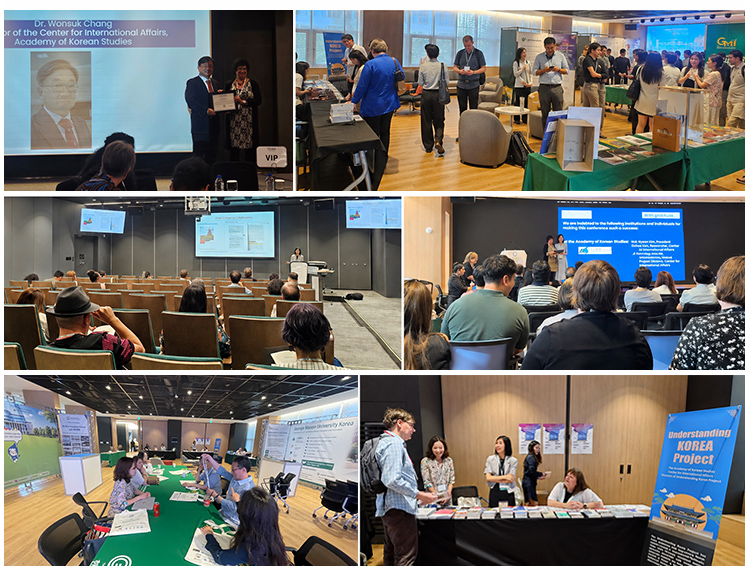
The Academy of Korean Studies (AKS) participated as an official partner institution in the 35th Annual Conference of the World History Association (WHA), held from June 25 to 27, 2026, at George Mason University Korea (GMU Korea).
This collaboration aimed to strengthen engagement with the U.S. community of world history educators and promote a broader and more balanced understanding of Korea in world history education. The Understanding Korea Project Division at AKS was involved in planning the conference from its early stages, and Dahee Kim, a researcher at the Academy, served as a member of the WHA Program Committee, contributing to the overall planning and operation of the annual conference.
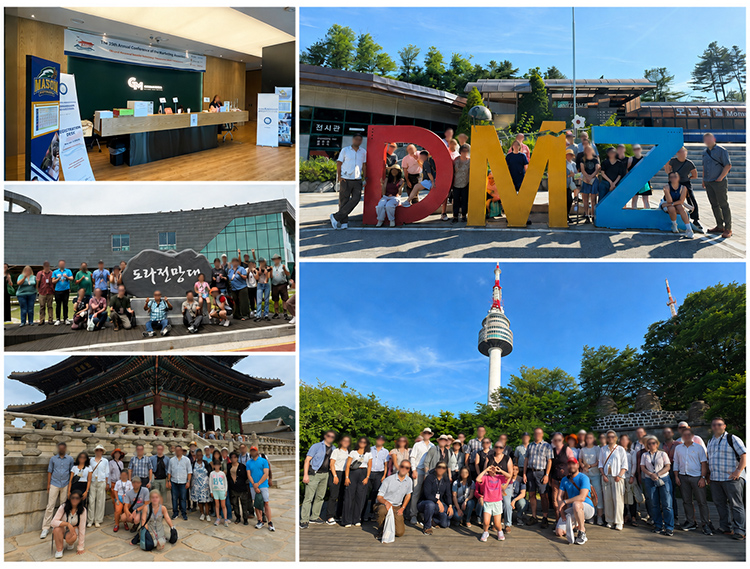
Prior to the conference, AKS organized a cultural study program on Korea for WHA participants from June 23 to 24. Participants visited the Demilitarized Zone (DMZ), major cultural heritage sites in Seoul, and museums, gaining firsthand insights into Korea’s history, society, and cultural heritage.
During the main conference, the Division operated a booth and organized Korea-focused sessions highlighting current approaches and key challenges in teaching about Korea in world history classrooms. In collaboration with the Korean Association of History Education, the Division also supported the participation of Korean history educators in the conference.
The Division also organized a special panel titled “Reframing Korea in World History: From Textbook Narratives to Classroom Practices.” The panel featured Kenneth R. Curtis, professor emeritus at California State University, Long Beach, and author of U.S. world history textbooks; Mimi Lee, professor at Seoul National University; and Dahee Kim, researcher at AKS. The panel examined representations of Korea in U.S. world history textbooks and explored how these narratives are incorporated into classroom practice, while also discussing strategies for promoting more balanced and comprehensive approaches to teaching about Korea.
The 2026 WHA collaboration provided a valuable opportunity to strengthen engagement with scholars and educators in the U.S. world history education community and to lay the groundwork for expanding Korea-related content in global history classrooms.
In recognition of its contributions as an official partner institution, the Academy of Korean Studies received certificates of appreciation.
Building on the educational network established through this collaboration, AKS will continue to pursue various initiatives to enhance understanding of Korea in educational settings overseas and promote the wider dissemination of Korea-related educational resources.
2. 2026 AKS Program for Textbook Specialists in Europe
The Understanding Korea Project Division of the Center for International Affairs at the Academy of Korean Studies will host the 2026 European Regional Education Cooperation Program at Ca’ Foscari University of Venice in Italy from Tuesday, July 14, to Wednesday, July 15, 2026.
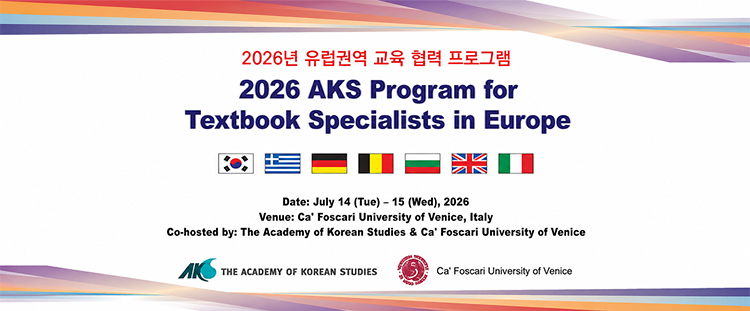
During the program, textbook experts and Korean Studies scholars will discuss how Korea is presented and taught in European textbooks and educational settings. Participants will share country-specific cases and achievements and explore ways to broaden the reach of the Understanding Korea Project and enhance its impact across Europe.
<European Regional Education Cooperation Program>
Tuesday, July 14, 2026
- Welcoming Remarks | Jang Won-seok, Director, Center for International Affairs, Academy of Korean Studies (Korea)
- Congratulatory Remarks | Ahn Jong-cheol, Professor, Ca’ Foscari University of Venice (Italy)
- Introduction to the Understanding Korea Project | Ahn Ji-young, Director, Understanding Korea Project Office, Academy of Korean Studies (Korea)
<Session 1> | Moderator: Ahn Jong-cheol, Professor, Ca’ Foscari University of Venice (Italy)
- School Textbooks—The Case of the Greek Educational System | Georgia Fermeli, Special Teaching Staff, National and Kapodistrian University of Athens; Textbook Author (Greece)
- Korea—A Topic for School Textbooks in Germany? | Uwe Andrae, Social Studies Textbook Editor, Cornelsen Verlag (Germany)
- Bulgarian Textbooks, Curriculum, and Innovative Approaches to Teaching About Korea: The HanPanDo Board Game Experience | Asya Antova, Teacher, 18th Comprehensive School “William Gladstone” (Bulgaria)
- Discussion on the Morning Presentations | Gilles Taillade, Teacher, Sisters of Mary School; Textbook Author (Belgium)
<Session 2> | Moderator: Kim Kuk-jin, Professor, University for Foreigners of Siena (Italy)
- The Use of Korea in British Textbooks | Garrett Nagle, Geography Teacher, St. Edward’s School; Textbook Author (United Kingdom)
- Provincializing Europe in the Classroom: Korea, Connected Histories, and Italian History Education | Germano Maifreda, Professor, University of Milan; Textbook Author (Italy)
- Rethinking Korea in European Textbooks | Jung Jae-yoon, Principal Researcher, Understanding Korea Project Office, Academy of Korean Studies (Korea)
- Discussion on the Afternoon Presentations | Jang Hye-jin, Senior Researcher, Understanding Korea Project Office, Academy of Korean Studies (Korea)
- General Discussion | Chair: Kim Kuk-jin, Professor, University for Foreigners of Siena (Italy)
Wednesday, July 15, 2026
- Lecture I: Italy and Germany’s Debate on the Ferrini vs. Federal Republic of Germany Case: Implications for Korean Japanese Forced Labor Issues | Ahn Jong-cheol, Professor, Ca’ Foscari University of Venice (Italy)
- Lecture II: Contemporary Korea in a Global Context | Francesca Frassineti, Professor, University of Turin (Italy)
- Roundtable: Tasks and Prospects for Cooperation on the Understanding Korea Project in Europe | Co-chairs: Jang Won-seok, Director, Center for International Affairs, Academy of Korean Studies (Korea), and Ahn Jong-cheol, Professor, Ca’ Foscari University of Venice (Italy)
※ Inquiries: Jung Jae-yoon, Principal Researcher, Understanding Korea Project Office, Center for International Affairs (jjy@aks.ac.kr)
3. The 108th Societas Koreana Lecture Meeting Held
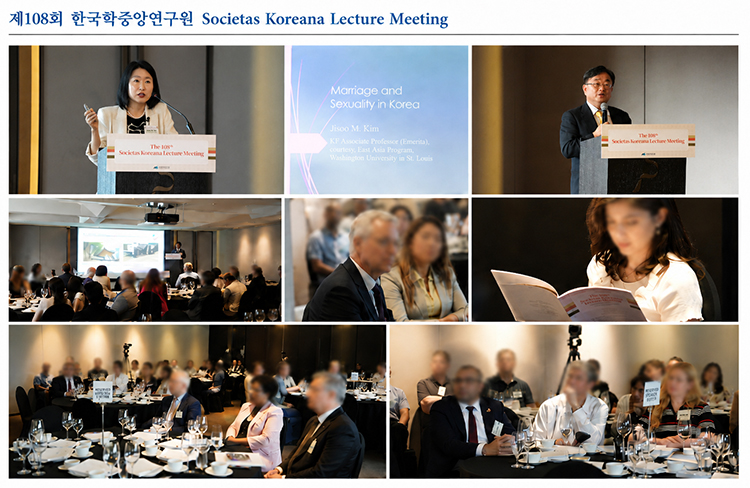
The Division of International Support for Korean Studies under the Center for International Affairs at the Academy of Korean Studies held the 108th Societas Koreana Lecture Meeting at The Plaza Seoul on Wednesday, July 8, 2026. At the event, Jisoo M. Kim, Professor at George Washington University, delivered a lecture titled “Marriage, Gender Equality, and Sexual Citizenship in South Korea.”
Professor Kim examined changes in the institution of marriage, family law, and Constitutional Court precedents, focusing on the reasons the crime of adultery remained in place for many years in South Korean society and the historical context in which women’s organizations supported the law. Drawing on major rulings, including the 2015 decision declaring the adultery law unconstitutional and the 2019 decision finding the abortion law constitutionally nonconforming, she highlighted how the scope of state intervention in individuals’ sexual and family lives has gradually narrowed, while individual rights—including the right to sexual self-determination and the right to privacy—have expanded.
Professor Kim also introduced cases involving the abolition of adultery laws in countries around the world. She explained how legal and social values surrounding marriage and family have shifted from an emphasis on protecting traditional moral norms and family order toward greater recognition of individual rights, including gender equality, sexual self-determination, and the right to pursue happiness.
The lecture provided a meaningful forum for examining changes in South Korea’s marriage system and family law from historical and international perspectives, while reflecting on the significance of democracy, gender equality, and citizenship. A recording of the lecture will be made available at a later date on the Societas Koreana YouTube channel.
4. Successful Completion of the 40th Korean Culture Workshop in 2026
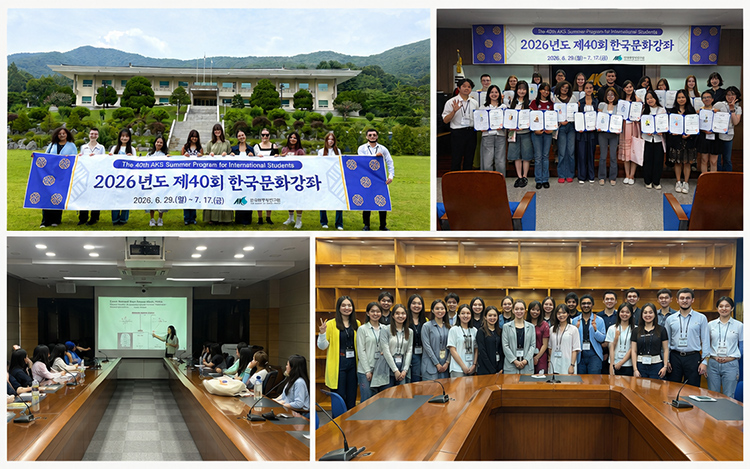
In July 2026, the Center for International Affairs at the Academy of Korean Studies successfully concluded the 40th Korean Culture Workshop. Since its launch in 1993, the workshop has welcomed approximately 1,051 students. For the 40th workshop in 2026, 19 international undergraduate students from 13 countries were selected to participate in the three-week program. All participants were majoring in Korean Studies at universities outside Korea and joined the workshop to explore future career paths as the next generation of Korean Studies scholars.
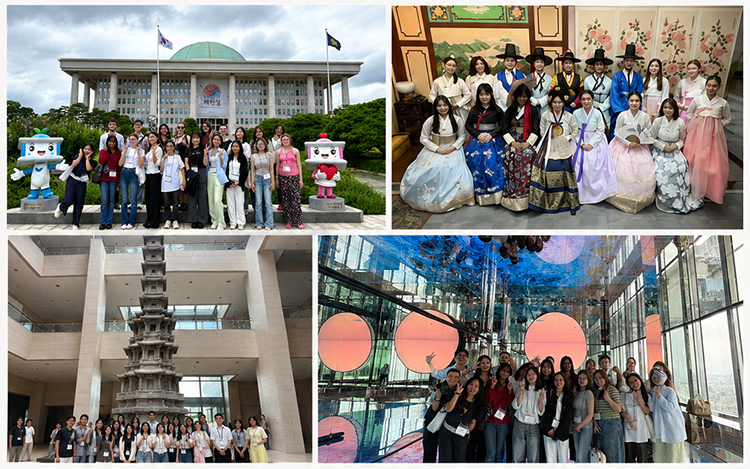
Throughout the program, participants attended Korean language classes tailored to their individual proficiency levels and improved their Korean language skills. They also gained a deeper understanding of Korea through special lectures on Korean history, culture, and the arts. In addition, they experienced both the traditional and contemporary aspects of Korea through visits to the National Museum of Korea, the National Palace Museum of Korea, HiKR Ground, Bukchon Hanok Village, the National Assembly, the Korea Confucian Culture Promotion Agency in Nonsan, and the Myeongjae Historic House.
Participants who hope to pursue graduate studies at the Graduate School of Korean Studies or other graduate schools in Korea in order to strengthen their academic capabilities and grow into the next generation of Korean Studies scholars are expected to play an important role in promoting Korea in their home countries, drawing on the experiences gained through the program.