Shared Shadows of Post-Colonial Nations
The historical trajectories of post-colonial nations often echo one another, bound by the common struggle to define a sovereign identity in the shadow of imperial domination and Cold War geopolitics. The Republic of Korea and the Republic of Indonesia, though geographically distant, represent one of the most compelling, yet unexamined, parallels in this global narrative. Both nations emerged from the traumatic yoke of Japanese colonial rule: Korea’s a thirty-five-year ordeal of forced assimilation (1910-1945) and Indonesia’s a shorter, yet violently transformative, occupation (1942-1945). Both were immediately thrust into the ideological turbulence of the Cold War, becoming critical frontlines in a global proxy war.
Yet, despite this deep historical resonance, the contemporary image of Korea accessible to most Indonesians remains a dangerously superficial binary. This essay will employ a comparative historical analysis to argue for the urgent development of nuanced, accessible, and multi-platform instructional materials on modern Korean history, specifically tailored for an Indonesian audience. By first diagnosing the current deficient portrayals as reflected in media and educational curricula and then dissecting the profound historical parallels between the two nations, particularly regarding the divergent paths taken in response to national division, this essay wishes to demonstrate that such an initiative is not merely an exercise in public diplomacy. Rather, it is a vital project of symbiotic intellectual partnership that can empower both nations to better comprehend their own complex pasts and build a more resilient, empathetic future.
The Deficient Portrayals in Modern Media
The current Indonesian understanding of the Korean peninsula is a bifurcated narrative curated almost exclusively by mass media, resulting in two incomplete and ultimately misleading caricatures. The first is the image of North Korea as a monolithic, irrational threat. A content analysis of leading Indonesian news portals reveals that coverage is overwhelmingly event-driven and securitized. Reports are dominated by missile launches and military parades or threats (Saputra, 2025), reinforcing the tired Western cliché of the "hermit kingdom."
This simplistic framing, while useful for generating headlines, is a profound analytical failure. It completely erases the historical context that created the DPRK: the trauma of the Korean War, which claimed millions of Korean lives; the origins of its Juche ideology as a radical response to centuries of foreign interference; and the genuine human tragedy of its isolated populace. The nation is flattened into an antagonist, precluding any possibility of empathetic or critical understanding.
"The nation is flattened into an antagonist, precluding any possibility of empathetic or critical understanding."
The second, and more pervasive, image is that of South Korea as a cultural and economic powerhouse, yet one that is socially pathological. The power of the "Korean Wave," or Hallyu, is undeniable. According to the Korea Foundation (2022), Indonesia possesses one of the world's most active and engaged global fanbases. This cultural affinity, however, is shallow. As Lee & O'Gorman (2020) note, the global consumption of Hallyu often focuses on aesthetics while ignoring the socio-historical context. This is exacerbated by Indonesian media, which frequently juxtaposes the glamour of K-Pop with the sensationalized pathologies of its society. Data on South Korea’s high suicide rates (Statistics Korea, 2024) are often cited alongside high-profile celebrity suicides and industry scandals.
This "glamour and pathology" framework completely obscures the foundational story of South Korea’s resilience. The nation's unprecedentedly rapid industrialization and modernization within two generations as an attempt to rise and appeal to its northern counterpart is the key to understanding both its economic triumphs and its social strains. Yet this concept is never presented. The arduous, bloody, and inspiring struggle for democratization, marked by pivotal events like the 1980 Gwangju Uprising and the June Democratic Struggle of 1987, is virtually unknown. The names of democratic heroes like Kim Dae-jung are absent, replaced by the names of idols. The result is a portrait of a nation without a past, defined only by the glittering and often tragic present.
Divergent Paths of Ideological Trauma
The greatest casualty of this deficient narrative is the loss of a vital opportunity for mutual learning rooted in the shared, yet divergent, trauma of national division. Following liberation from Japan, both nations were ideological battlegrounds. In Korea, the United States Army Military Government in Korea (USAMGIK) in the south and the Soviet administration in the north formalized a division at the 38th parallel that became permanent after a devastating war. In Indonesia, President Sukarno attempted to balance the competing forces of Nationalism, Religion, and Communism under his NASAKOM doctrine. This precarious balancing act ultimately collapsed, leading to the 1965-66 mass killings. As meticulously documented by historian John Roosa (2006) in Pretext for Mass Murder, this violent purge was systematically orchestrated to eliminate the Indonesian Communist Party (PKI) and its affiliates.
Yet here is exactly where the critical divergence that holds a profound lesson lies. Korea’s ideological wound was externalized into a physical, geographic border. The division is a constant, visible, and openly discussed national trauma, a source of political rhetoric and a recurring theme in celebrated films like JSA: Joint Security Area (Park, 2000). Indonesia’s wound, however, was internal. It was resolved through a brutal purgation that, according to historians, resulted in the deaths of at least 500,000 people (Cribb, 2001) and was shrouded in a state-sponsored silence and historical amnesia, as documented in works like The Act of Killing (Oppenheimer, 2012).
This glaring omission of a comparative perspective within Indonesia's national K-12 history curriculum, the Kurikulum Merdeka, represents a significant pedagogical failure. By failing to engage with the nuances of Korea’s 70-year struggle to manage its division without a final, annihilating conflict, from high-level talks to President Kim Dae-jung’s landmark "Sunshine Policy", Indonesians are deprived of an essential framework through which to safely reflect upon one of the most formative and painful chapters of their own nation’s history.
Strategic Solutions for Pedagogical Gaps
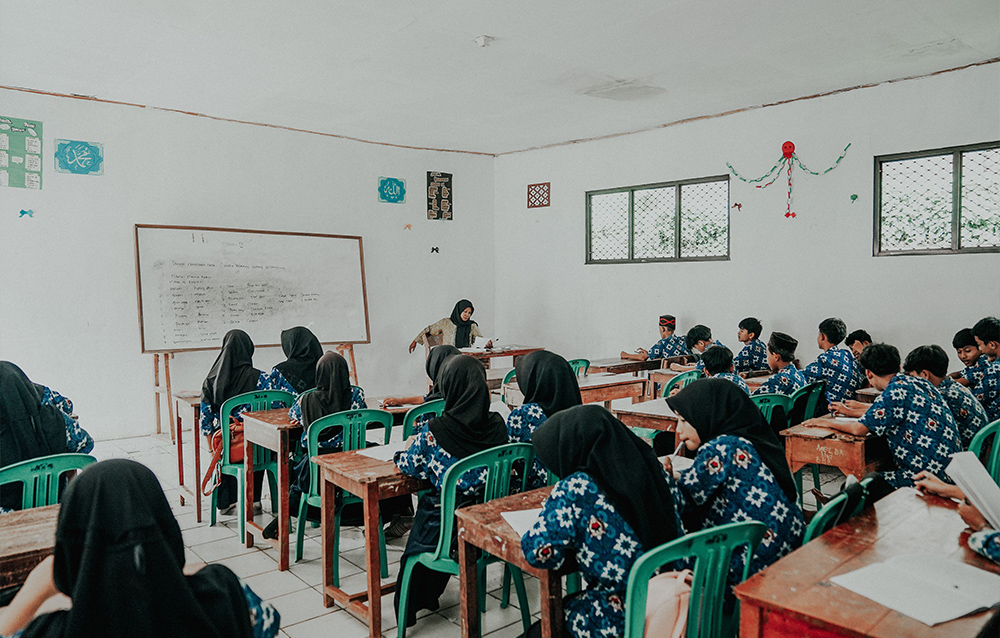
To remedy this pedagogical gap, a comprehensive, multi-tiered strategy is required. This initiative could be built on two core pillars: foundational curriculum development and digital public history. Through foundational curriculum development, a comparative Indonesian-Korean history module can be integrated into the Indonesian senior high school curriculum (Grades 11-12).
This age group is chosen because they will have received more comprehensive history lessons and thus are able to discern the complex nuanced history of the Cold War in both nations. In addition, the last two years of senior high are the most crucial time for career and higher education decision making. Exposure to comparative Korean history may positively influence the rise of interest for Korean studies. The module can benefit by being developed in partnership between the AKS and Indonesia's Ministry of Education and Culture to consist of two main topics as a guide:
- Shared Colonial Legacies and Divergent Nationalisms: Discourse in this topic would compare the Japanese colonial policies in both nations, for example the forced assimilation and language suppression (sōshi-kaimei) in Korea versus the co-opting of nationalist leaders in Indonesia, and analyze how these different experiences shaped their respective independence movements.
- The Impact of the Cold War (Division and Reconciliation): This topic should address the contrast between the Korean War and the enduring division with the 1965 tragedy in Indonesia. It would introduce students to concepts like the Sunshine Policy and the ongoing challenges of inter-Korean dialogue, providing them with the vocabulary and analytical tools to discuss themes of historical trauma, justice, and reconciliation in a manner that is both academically rigorous and politically sensitive.
In achieving this integration, high-level educator exchange should also be necessary. To ensure long-term sustainability, the initiative must invest in the educators themselves. AKS could host annual or biennial workshops in both Korea and Indonesia for Indonesian history teachers, providing them with resources, pedagogical training, and direct access to Korean scholars. Simultaneously, a joint committee could oversee the translation of seminal Korean academic works on modern history and sociology into Bahasa Indonesia, making them accessible to university students and the public, thereby enriching the intellectual ecosystem in Indonesia for years to come.
In addition to the formal approach through education, to engage the 98% of Indonesian youth who are active on social media, a robust digital strategy is essential. This pillar would focus on creating accessible, engaging, and historically accurate content for platforms like YouTube, Instagram, and TikTok. A joint project between an institution like the AKS and a trusted Indonesian educational content creator (e.g., Kok Bisa? or Asumsi) could produce short video essays or visually appealing Instagram posts that break down key events, figures, and concepts, complete with sourcing and links for further reading.
Five-to-ten-minute videos explaining complex topics like "What is Martial Law?" or "The Gwangju Uprising and Indonesia's Reformasi 1998: A Tale of Two Pro-Democracy Movements” or even a dedicated web portal featuring Indonesian-subtitled oral histories from separated Korean families, can help reach the domineering population of youths and expose them with the multidimensional image of Korea that the mainstream media has flattened.
A Maturity into Symbiotic Partnership
The relationship between Indonesia and Korea has the potential to mature from one of simple economic and cultural exchange into a symbiotic intellectual partnership. This can only be achieved if it is built on a foundation of mutual understanding that goes deeper than pop music and headlines. The current superficial perception of Korea in Indonesia is solvable still, a pedagogical gap simply waiting to be filled.
By investing in a comprehensive, multi-platform educational strategy as outlined, the Republic of Korea can offer Indonesia something far more valuable than its cultural products: it can offer a mirror for critical self-reflection. This is a strategic investment in a resilient, deeply empathetic, and truly reciprocal partnership. It is a formal invitation for two nations that have weathered the same historical storms to learn from one another’s voyages, ensuring the profound lessons of the past become a bridge to a shared and enlightened future.
References
- Cribb, R. (Ed.). (2001). The Indonesian killings of 1965-1966: Studies from Java and Bali. Monash Asia Institute.
- Korea Foundation. (2022). 2022 Global Hallyu status. https://www.kf.or.kr/
- Lee, J., & O'Gorman, B. R. (2020). From cultural cringe to cultural appropriation: The globalization of K-pop and the performance of Blackness. Journal of Popular Music Studies, 32(4), 51–71. https://doi.org/10.1525/jpms.2020.32.4.51
- Oppenheimer, J. (Director). (2012). The act of killing [Film]. Final Cut for Real.
- Park, C. (Director). (2000). JSA: Joint Security Area [Film]. Myung Film.
- Roosa, J. (2006). Pretext for mass murder: The September 30th movement and Suharto's coup d'état in Indonesia. University of Wisconsin Press.
- Saputra, E. (2025, March 18). Korut tembakkan rudal balistik jarak pendek ke arah Laut Timur. CNN Indonesia. https://www.cnnindonesia.com/internasional/20250318-korut-tembakkan-rudal-balistik
- Statistics Korea. (2024). 2023 Cause of death statistics. https://kostat.go.kr/portal/eng/index.action