The Historical Relevance of Korea
What is the historical relevance of a country? Posed in this way, the question has no definitive answer.
History cannot be viewed from an absolute perspective. Depending on the perspective, things take on varying degrees of relevance in their relationship with other events. This perspective is in turn determined by factors such as proximity, geography, culture, similarities, and intertwined experiences. If studying history helps us better understand who we are and the world we inhabit, then the history of another country becomes more meaningful when it relates to our own histories, whether they intersect, echo one another as separate trajectories, or connect in some kind of way.
 Historical and contemporary landscapes of Korea
This is neither about accepting nor rejecting the national or identity-driven approach that recent Italian ministerial guidelines emphasize in the history taught in Italian schools. Even when advocating for a global, non-Eurocentric perspective that is open to the diversity and knowledge of distant peoples and cultures, we are not free from our situated worldview. We inevitably assigns greater relevance to those parts of the world whose histories are intertwined with our own.
How relevant is Korea in the history that is being taught in Italian schools? Based on my direct and indirect experience, very little. In high school textbooks, aside from a few geographical references while discussing journeys of exploration, Korea appears only in the final year of high school, presented as a contested territory in the conflict between Russia and Japan that led to the Russo-Japanese War in 1905 and the Japanese colonial rule of the Korean peninsula. Korea is then covered in greater detail in terms of the Korean War, which devastated the peninsula between 1950 and 1953 and marked the beginning of the Cold War. Yet even here, the focus remains on the dynamics and consequences of military confrontation; little is said about Korean society, which was both the protagonist and victim of the war. South Korea in mentioned in the discussion of emerging Southeast Asian economies, while North Korea remains in the background as a threatening, isolated state.
This is the overview we gave our Korean guests when they invited us to discuss history textbooks used in Italian schools and the status of Korea in them.
How can we expand and enrich the way Korea is presented? The following reflections offer some possible directions.
Where Is Korea? On the Periphery
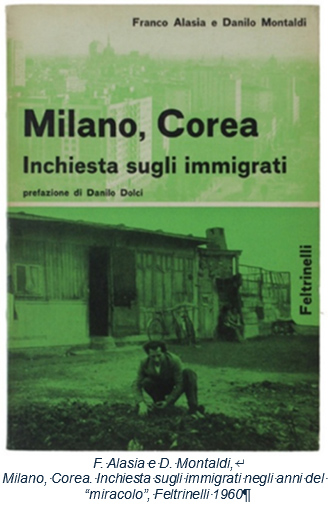
In Milan during the 1950s and 1960s, “Korea” had a widespread presence. Even the high school in the city center I attended had spaces collectively called “Corea”: basements and storage that had been converted into classrooms to accommodate the growing number of students produced by the baby boom. No one questioned the origin of this name. It evoked a vaguely exotic and clearly unhappy place. The name was also assigned the crowded settlements in the outskirts where large numbers of southern Italian migrants, drawn by the large-scale factories complexes, lived together. By 1965, it was estimated that up to one hundred thousand people lived in the several “Coree” around Milan.
But why were each settlement called “Corea”? The explanation is quite simple. In 1953, the Korean War started by North Korea three years ago, in 1950, to unify the peninsula by conquering South Korea ended in a ceasefire. The threat of a communist victory by the North was enough for the United States to immediately join the war in defense of the South, causing a war fought in an unknown, distant country quickly garner global attention in the broader context of the Cold War. The Korean War, having broken out only a few years after the catastrophe of World War 2, was extremely violent and produced millions of refugees and displaced persons. Their images, featured in newspapers and newsreels, overlapped with the migrants seeking a place to live in the now large industrial city of Milan. In short, even though little was known about Korea at the time, news from there was enough to nickname the settlements on the peripheries of Milan flooded by migrants in search of shelter “Corea”.
The Hermit Kingdom
 The unique historical trajectory of Korea as the "Hermit Kingdom"
Students at my high school, both during my school years and after that, did not learn either from textbooks or teachers about the country whose name was used to call certain spaces in their school. As the American historian Michael J. Seth observes, Korea is “a land whose history, apart from the conflicts in which it has been involved, has attracted little attention from the rest of the world, at least until recently.” According to Seth, this isolation is partly because Korea has long been overshadowed by its more powerful neighbors, China and Japan, as well as its geographical location, which places it outside the main routes traveled by European navigators during the Age of Exploration.
Limiting contact with the outside world—particularly with Western powers—however, was also a deliberate choice maintained by Korean governments throughout much of modern history in order to protect the country from foreign interference. This policy earned Korea the label of the “Hermit Kingdom,” as in the late nineteenth-century book Korea: The Hermit Nation by William E. Griffis.
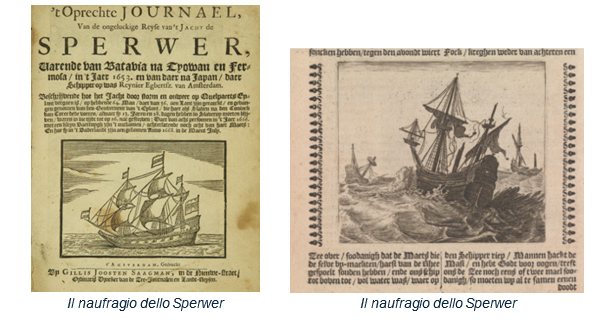
One anecdote aptly illustrates this aspect of Korean history. In 1653, the Dutch ship De Sperwer (“The Sparrowhawk”), en route to Japan, was shipwrecked near Jeju Island off the southern coast of Korea. The authorities welcomed the survivors but did not allow to resume their voyage and instead transported them to Seoul, where they lived in relative freedom but were nevertheless forbidden to leave the country. Among them was Hendrick Hamel (1630–1692), an accountant of the Dutch East India Company (Vereenigde Oostindische Compagnie, or VOC). Thirteen years later, Hamel managed to escape with several companions and reached the VOC trading base in Nagasaki, Japan, from which he returned to the Netherlands. He began writing an account of his travels, which was published in 1688 under the title Hamel’s Journal and a Description of the Kingdom of Korea, 1653–1666 (Journal van de Ongeluckige Voyage van 't Jacht de Sperwer) This was the first—and for the next two centuries, the only—description of Korea available to the Western audience.
A Korean Immigrant in Seventeenth-Century Italy
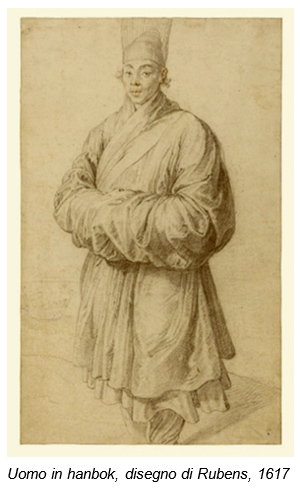 Man in Korean Costume," drawing by Peter Paul Rubens, 1617
While there are no records of Western travelers visiting Korea before Hamel, there is well-documented evidence of a Korean who, nearly a century earlier, made the opposite journey of reaching Italy and even settling there for the rest of his life. This figure, a young man, was captured along with thousands of other Koreans by the Japanese during the Imjin War of 1592. After being taken to Nagasaki, Japan, he was bought up as a slave by the Florentine merchant Francesco Carletti (1573–1636), who had him baptized, giving him his father’s name, Antonio, and after emancipating him, took him along on his travels. We know of these events through Carletti himself, whose travelogue, My Voyage Around the World: The Chronicles of a 16th-Century Florentine Merchant (Ragionamenti sopra le cose da lui vedute ne’ suoi viaggi), was published posthumously in Florence, Italy.
We know that this Korean named Antonio settled in Rome. There is no further documented information about him beyond that. In the twentieth century, several intriguing hypothesis, albeit without certain historical evidence, have been proposed regarding him. One concerns a 1617 sketch by the Flemish artist Peter Paul Rubens titled “Man in Korean Costume” that depicts a man wearing traditional Korean attire, or hanbok. Some historians see this as the young Antonio, portrayed during the Flemish painter’s stay in Rome. Later, the name Antonio Corea was linked to the notable presence of people with that surname in the small town of Albi, in the province of Catanzaro, Italy. These individuals are believed to be descendants of this first Korean immigrant, among whom may include Armando Anthony Corea, known as Chick Corea (1941–2021), one of the greatest jazz composers and pianists of our time, whose grandfather emigrated from Albi to the United States at the end of the nineteenth century.
The Line Drawn on a Map
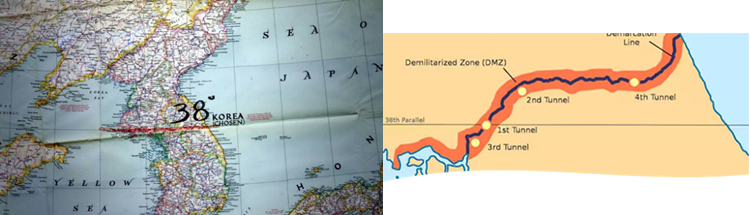 The 38th parallel: A division marked by geopolitical decisions
The moment when Korea suddenly appeared in all history textbooks was when the war between the North and South of the Korean peninsula broke out. With the indirect involvement of the Soviet Union and the direct intervention of the United States—and later China—the conflict quickly became one of the most intense phases of the Cold War. Even so, it is evident that the few pages devoted to this conflict only give a clear account of the international actors and the constantly changing power dynamics between them, while Korea and the Korean people, as well as the violent upheavals that continued in both sides in the aftermath of this civil war, remain in the background. Although many peripheral conflicts during the 40 years of the Cold War can be described as proxy wars, the weight of external political and military decisions that were imposed are particularly evident in the case of the Korean War
This is especially true of the 38th parallel, which marks division of Korean peninsula back then and today—a line that was not the result of the war but rather the designation of its cause. The front line when the war came to a halt lay roughly along but did not exactly match the 38th parallel. The actual front line was an irregular line stretching from the east to west coast of the peninsula that had formed by intense fighting and a staggering number of casualties on both sides as a result. However, it was not military confrontation that placed the line at that latitude. Instead, it was the decision made by the victorious power—mainly the United States and the Soviet Union—at the end of World War 2 to divide their respective spheres of influence.
By the summer of 1945, Nazi Germany had already been defeated, and Japan, which had been its ally, was struggling between the desire to end a lost war and the extremists who were resolved to fight until the very end. While the United States edecided to use its atomic bombs (dropped on August 6 and 9), the Soviet Union, at the request of its allies, declared war on Japan (August 8) and swiftly advanced into Manchuria, soon reaching Korean territory. Concerned that Soviet Amry might occupy the entire Korean peninsula and even threaten Japan, the Americans urged the Soviet Union, their allies-turned-rivals, to establish a line of demarcation. Two American officers, Dean Rusk and Charles H. Bonesteel Ⅲ, proposed such a line, arbitrarily drawing it along the 38th parallel north on a map of Korea found in an issue of National Geographic magazine. The Soviets raised no objections, and this artificial line became the boundary.
As Rusk later admitted in his memoirs, it was a division “that made no logical sense in the history of Korea, neither geographically nor economically.” Five years later, the Korean War would transform that artificial line into the permanent border of a nation split into two countries by a decision made by others—with a simple stroke of the pen on a map.