


Essay Contest Result

Between “Kimchee” and “Kimchi”
“Mach dein eigenes Kimchi!” Make your own kimchi!
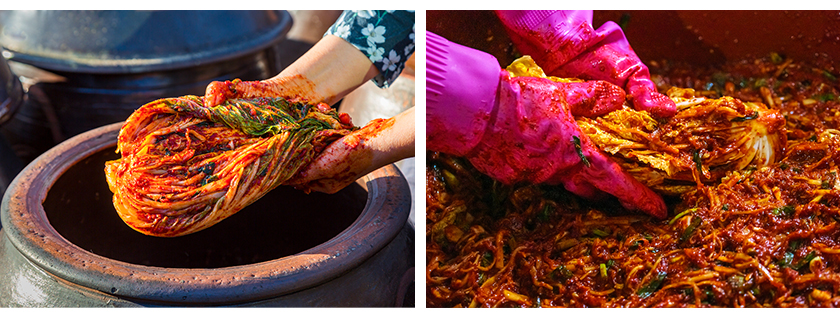
This phrase frequently appears at kimchi-making workshops held throughout Germany these days. It’s both fascinating and amusing to see how this Korean traditional fermented food, once so unfamiliar, has now become part of everyday German experience—especially for someone like me who, despite living in Germany for over a decade, still cannot eat a meal without kimchi. Indeed, kimchi-related events are now regularly held in major cities like Berlin, Frankfurt, and Hamburg. K-food experiences that blend the science and culture of kimchi fermentation with the touch of hand-made preparation are spreading as a lifestyle phenomenon. In fact, Germany has been relatively slow to embrace the Korean Wave within Europe, but in recent years, interest has risen sharply.
Beyond K-pop and K-dramas, enthusiasm for K-food has grown noticeably, and kimchi is no longer just a side dish on Korean tables. After all, kimchi, kimchi sauce, and kimchi ramen now have a prominent place on local supermarket shelves.
There was once a cultural controversy surrounding kimchi. In 2021, an article in China’s state-run Global Times sparked debate by suggesting, based on International Organization for Standardization (ISO) matters, that “kimchi is a type of China’s Sichuan paocai.” Though it happened several years ago, I read about it with great interest and still remember it vividly. At the time, China’s Ministry of Foreign Affairs and some netizens claimed that kimchi originated from Chinese food culture, which drew strong opposition from the Korean government and public. This became not merely a dispute over names but an acute conflict between the two nations over food origins and cultural identity. Ultimately, this incident led to clearer distinctions between kimchi and paocai: kimchi is a spicy, complex fermented food made with red pepper powder, garlic, and salted seafood (jeotgal), characterized by gradual development of deep flavors through lactic acid fermentation. Paocai, in contrast, is a simple pickle made by soaking vegetables in vinegar or brine for a predominantly sour taste, with fundamental differences in fermentation methods and ingredients. This emphasized that kimchi is not simply “fermented vegetables” but a traditional food shaped by Korea’s climate, food culture, and diverse preparation methods. To prevent such confusion, the Korean government recommended that kimchi be transliterated as “xinqi” in Chinese. However, the reality remains that kimchi is still often perceived as paocai in China—clearly not an easy problem to resolve. Food sometimes becomes a symbol of cultural pride, sometimes a subject of diplomatic sensitivity. Now that kimchi has established itself as a popular hands-on cultural experience in Germany, I believe we must view Korean food as more than just “delicious food from Korea.” The time, history, regionality, climate, and traditions contained in kimchi represent the collective culture of Korea itself.
Recently, a photograph in the “lactic acid fermentation” section of an international school biology textbook caught my attention. Below an image of kimchi neatly arranged in a ceramic vessel resembling a kimchi jar was this English description:
“Kimchee, a Korean vegetable dish, is produced by fermenting cabbage and other vegetables.”
When I first read this sentence, what struck me as most unfamiliar was the spelling “kimchee.” Since I understood that “kimchi” had already become the standard Romanization internationally, “kimchee” felt like an archaic or non-standard spelling used when kimchi was first introduced abroad. The Korean government has designated “kimchi” as the official Romanization through the Ministry of Culture, Sports and Tourism’s Romanization system, and the same spelling was used when kimchi was inscribed on UNESCO’s Intangible Cultural Heritage list. Nevertheless, the use of “kimchee” in a textbook—typically considered an authoritative source—revealed a gap in cultural awareness. I was also disappointed by the description of kimchi as simply “a Korean vegetable dish.” While kimchi’s main ingredient is vegetables, it doesn’t stop at being merely a vegetable-based dish. Its essence lies in fermentation, which is the fundamental element that makes kimchi kimchi. Though the word “fermented” appeared later in the sentence as an explanation, it seemed insufficient to represent the food’s identity. In summary, something like “Kimchi, a traditional Korean fermented dish” would be more appropriate.
In addition, the use of the word “cabbage” in this sentence made me tilt my head in puzzlement. In English-speaking countries, “cabbage” generally brings to mind round heads of cabbage in shades of green or purple. Of course, cabbage kimchi exists, and I myself have made kimchi with cabbage and kimchi seasoning to approximate kimchi’s form. However, kimchi’s most representative and traditional ingredient is napa cabbage. Napa cabbage has long stalks, tender leaves, and a structure suitable for fermentation. Simply saying “cabbage” can cause misunderstanding about kimchi’s ingredients and lead to cultural confusion.
Therefore, the expression could be refined as follows: “Kimchi, a traditional Korean fermented dish, is made by fermenting napa cabbage and other vegetables.” I believe this sentence more accurately expresses kimchi’s essence and cultural specificity by centering the fermentation process and specifying the precise ingredient of napa cabbage. Kimchi is a traditional food that has long been central to Korean dietary life. A true “living cultural heritage” where kimchi varieties change with the seasons, ingredients and preparation methods vary by region, and each household’s ancestral touch is embedded. Moreover, kimchi itself embodies the Korean people’s climate, geography, preservation culture, and community spirit. Therefore, reducing kimchi to simply a “vegetable dish” can be seen as a description that overlooks its cultural context and identity.
Of course, as a science textbook, it may have opted for brevity, but given the cultural weight carried by each word and term, international teaching materials demand even greater care in their language choices. Interest in kimchi is growing worldwide—in Germany, France, the United States, and beyond. Even the ramen company that swept the world with the Buldak Ramen has released Kimchi Buldak Ramen, showing how popular the single word “kimchi” has become. This is precisely why we must spread accurate information and cultural context to the world. When introducing kimchi, clearly explaining its fermentation process and ingredient identity, and preserving the unique name “kimchi” is not simply a matter of language choice. I believe this is a process of cultural translation that accurately conveys Korean culture to the world and serves as a starting point for building national image. We can no longer view kimchi as merely food. It contains Korean identity, the Korean life philosophy of harmony with nature, and hundreds of years of historical time. So if a single textbook line or translation can distort or diminish kimchi’s essence, accurate language choices and respect for culture become that much more important. Even as kimchi becomes a global food, we must remember that its roots and history unconditionally lie in Korea.
To achieve this, efforts to protect and correct cultural identity must begin with the small difference between “kimchee” and “kimchi” that we encounter today.
Kimchi is a symbol of Korean culture that the world makes together. Today, too, I live as a small “Korea” here in Germany. Even in the moment of making kimchi together with Germans, we must remember that cultures extend hands to each other and share identity.
This phrase frequently appears at kimchi-making workshops held throughout Germany these days. It’s both fascinating and amusing to see how this Korean traditional fermented food, once so unfamiliar, has now become part of everyday German experience—especially for someone like me who, despite living in Germany for over a decade, still cannot eat a meal without kimchi. Indeed, kimchi-related events are now regularly held in major cities like Berlin, Frankfurt, and Hamburg. K-food experiences that blend the science and culture of kimchi fermentation with the touch of hand-made preparation are spreading as a lifestyle phenomenon. In fact, Germany has been relatively slow to embrace the Korean Wave within Europe, but in recent years, interest has risen sharply.
Beyond K-pop and K-dramas, enthusiasm for K-food has grown noticeably, and kimchi is no longer just a side dish on Korean tables. After all, kimchi, kimchi sauce, and kimchi ramen now have a prominent place on local supermarket shelves.
There was once a cultural controversy surrounding kimchi. In 2021, an article in China’s state-run Global Times sparked debate by suggesting, based on International Organization for Standardization (ISO) matters, that “kimchi is a type of China’s Sichuan paocai.” Though it happened several years ago, I read about it with great interest and still remember it vividly. At the time, China’s Ministry of Foreign Affairs and some netizens claimed that kimchi originated from Chinese food culture, which drew strong opposition from the Korean government and public. This became not merely a dispute over names but an acute conflict between the two nations over food origins and cultural identity. Ultimately, this incident led to clearer distinctions between kimchi and paocai: kimchi is a spicy, complex fermented food made with red pepper powder, garlic, and salted seafood (jeotgal), characterized by gradual development of deep flavors through lactic acid fermentation. Paocai, in contrast, is a simple pickle made by soaking vegetables in vinegar or brine for a predominantly sour taste, with fundamental differences in fermentation methods and ingredients. This emphasized that kimchi is not simply “fermented vegetables” but a traditional food shaped by Korea’s climate, food culture, and diverse preparation methods. To prevent such confusion, the Korean government recommended that kimchi be transliterated as “xinqi” in Chinese. However, the reality remains that kimchi is still often perceived as paocai in China—clearly not an easy problem to resolve. Food sometimes becomes a symbol of cultural pride, sometimes a subject of diplomatic sensitivity. Now that kimchi has established itself as a popular hands-on cultural experience in Germany, I believe we must view Korean food as more than just “delicious food from Korea.” The time, history, regionality, climate, and traditions contained in kimchi represent the collective culture of Korea itself.
Recently, a photograph in the “lactic acid fermentation” section of an international school biology textbook caught my attention. Below an image of kimchi neatly arranged in a ceramic vessel resembling a kimchi jar was this English description:
“Kimchee, a Korean vegetable dish, is produced by fermenting cabbage and other vegetables.”
When I first read this sentence, what struck me as most unfamiliar was the spelling “kimchee.” Since I understood that “kimchi” had already become the standard Romanization internationally, “kimchee” felt like an archaic or non-standard spelling used when kimchi was first introduced abroad. The Korean government has designated “kimchi” as the official Romanization through the Ministry of Culture, Sports and Tourism’s Romanization system, and the same spelling was used when kimchi was inscribed on UNESCO’s Intangible Cultural Heritage list. Nevertheless, the use of “kimchee” in a textbook—typically considered an authoritative source—revealed a gap in cultural awareness. I was also disappointed by the description of kimchi as simply “a Korean vegetable dish.” While kimchi’s main ingredient is vegetables, it doesn’t stop at being merely a vegetable-based dish. Its essence lies in fermentation, which is the fundamental element that makes kimchi kimchi. Though the word “fermented” appeared later in the sentence as an explanation, it seemed insufficient to represent the food’s identity. In summary, something like “Kimchi, a traditional Korean fermented dish” would be more appropriate.
In addition, the use of the word “cabbage” in this sentence made me tilt my head in puzzlement. In English-speaking countries, “cabbage” generally brings to mind round heads of cabbage in shades of green or purple. Of course, cabbage kimchi exists, and I myself have made kimchi with cabbage and kimchi seasoning to approximate kimchi’s form. However, kimchi’s most representative and traditional ingredient is napa cabbage. Napa cabbage has long stalks, tender leaves, and a structure suitable for fermentation. Simply saying “cabbage” can cause misunderstanding about kimchi’s ingredients and lead to cultural confusion.
Therefore, the expression could be refined as follows: “Kimchi, a traditional Korean fermented dish, is made by fermenting napa cabbage and other vegetables.” I believe this sentence more accurately expresses kimchi’s essence and cultural specificity by centering the fermentation process and specifying the precise ingredient of napa cabbage. Kimchi is a traditional food that has long been central to Korean dietary life. A true “living cultural heritage” where kimchi varieties change with the seasons, ingredients and preparation methods vary by region, and each household’s ancestral touch is embedded. Moreover, kimchi itself embodies the Korean people’s climate, geography, preservation culture, and community spirit. Therefore, reducing kimchi to simply a “vegetable dish” can be seen as a description that overlooks its cultural context and identity.
Of course, as a science textbook, it may have opted for brevity, but given the cultural weight carried by each word and term, international teaching materials demand even greater care in their language choices. Interest in kimchi is growing worldwide—in Germany, France, the United States, and beyond. Even the ramen company that swept the world with the Buldak Ramen has released Kimchi Buldak Ramen, showing how popular the single word “kimchi” has become. This is precisely why we must spread accurate information and cultural context to the world. When introducing kimchi, clearly explaining its fermentation process and ingredient identity, and preserving the unique name “kimchi” is not simply a matter of language choice. I believe this is a process of cultural translation that accurately conveys Korean culture to the world and serves as a starting point for building national image. We can no longer view kimchi as merely food. It contains Korean identity, the Korean life philosophy of harmony with nature, and hundreds of years of historical time. So if a single textbook line or translation can distort or diminish kimchi’s essence, accurate language choices and respect for culture become that much more important. Even as kimchi becomes a global food, we must remember that its roots and history unconditionally lie in Korea.
To achieve this, efforts to protect and correct cultural identity must begin with the small difference between “kimchee” and “kimchi” that we encounter today.
Kimchi is a symbol of Korean culture that the world makes together. Today, too, I live as a small “Korea” here in Germany. Even in the moment of making kimchi together with Germans, we must remember that cultures extend hands to each other and share identity.
[Excellence Prize]
김지혜
(Country of Activity: Germany)

김지혜
(Country of Activity: Germany)
