

Culture Focus
Education in Korea - 2
Education Fever and the Testing System in South Korea
During the 1970s and 1980s, the rapid growth of secondary education in Korea was driven by a significant increase in the student population during the late 1960s and early 1970s. This period saw some of the most transformative education reforms in Korean history, collectively known as the equalization policies. These reforms emerged in response to profound structural, political, and demographic changes in Korean society. Key initiatives included the 1969 lottery system for middle school admissions and the 1974 equalization policy for high school admissions.
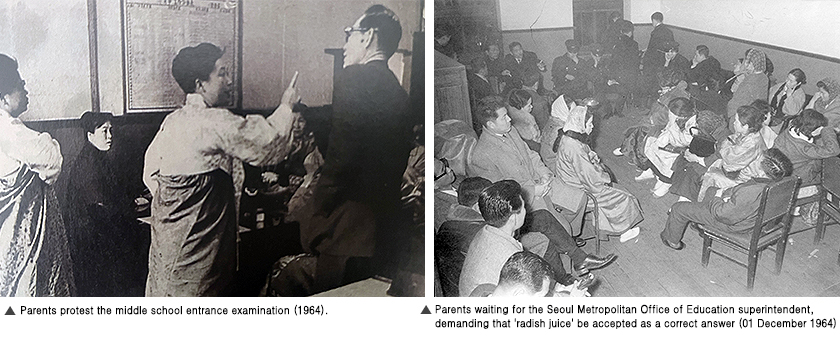
A notable incident from the mid-1960s underscores the extreme competitiveness of middle school admissions. Known as the “White Radish Shock of 1964,” the controversy arose during the Seoul middle school entrance exam. The exam included a science question asking which substance could saccharify ingredients to make Korean taffy, yeot. The correct answer was listed as diastase, but some students answered “white radish juice,” because it also contains diastase. The main problem was that science textbooks in elementary schools mentioned that white radish contains a diastase. It was also true that there was a possibility that radish juice could be seen as the correct answer. Therefore, parents protested, arguing their children’s answers were valid and even demonstrated that yeot could be made using radish juice.
This turmoil led the Seoul Metropolitan Office of Education in 1965 to officially recognize “white radish juice” as a correct answer. Furthermore, the dispute escalated to the courts, culminating in the High Court of Justice in Seoul ruling on March 30, 1965, to invalidate the initial dismissal of the entrance exam results. Consequently, over 40 students received additional points, enabling them to enroll in Gyeonggi Middle School, one of the most prestigious institutions of the time. This controversy played a pivotal role in abolishing middle school entrance exams in Korea.
The primary reason for the “White Radish Shock” was the stark distinction between elite and less prestigious middle schools.
Many parents aspired to enroll their children in renowned middle schools, such as Gyeonggi Middle School and Kyungbok Middle School, intensifying the competition among elementary school students. The pressure to secure admission to these elite institutions created significant challenges for young students and their families.
In response, in 1969, Korea's Ministry of Education (MOE) introduced a new lottery-based middle school admission system, effectively eliminating the hierarchical ranking of middle schools.
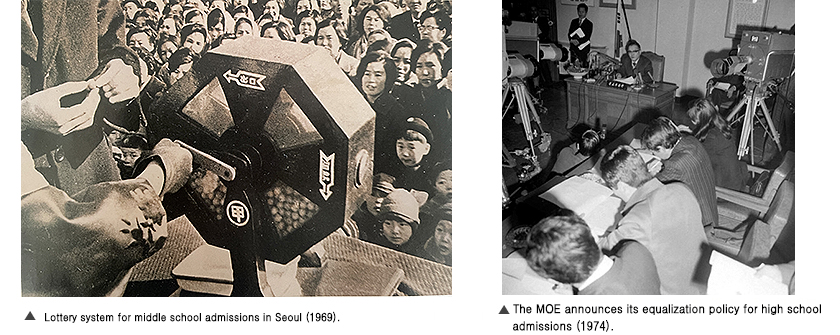
This reform extended to private primary schools, which were also included in the lottery system, thus removing their elitist status. The reform imposed strict regulations on tuition fees and mandated regular rotation of teachers to ensure equity.
While the examination reform of 1969 did not completely eliminate the intense competition for educational opportunities, it helped the expansion of opportunities for middle school education. It also reflected widespread public concern about breaking down class barriers and promoting equality of opportunity in education. When the lottery-based admission for middle schools was first implemented in 1969, it applied only to students in the capital city of Seoul, and most sixth-grade boys and girls participated. The system was expanded to 10 additional cities in 1970 and rolled out nationwide in 1971, marking a significant step toward equalizing access to secondary education across Korea.
With greater numbers of middle school students, the competition for entering high school grew sharply
The lottery system for middle school entrance shifted the final goal of Korean students from entry into elite middle schools to entry into elite high schools.
Following the abolition of middle school entrance examinations, attention shifted to the high school admission system. The public largely supported the elimination of elite middle schools, as their competitive entrance exams had long been criticized for undermining school education. However, this change intensified competition for admission to top high schools. Prior to 1969, many elite high schools were affiliated with middle schools on the same campus, allowing automatic promotion for students admitted to the middle school. With the end of the middle school entrance exams, this linked secondary education system was dismantled, making the high school admissions process more competitive.
To address these challenges, the Ministry of Education (MOE) introduced a new high school admissions policy in 1973, modeled after the district-based lottery system used for middle schools. This system applied to all non-vocational academic high schools, public and private, and aimed to equalize educational opportunities.
The policy was first implemented in Seoul and Busan in 1974 and later extended to major cities such as Daejeon, Incheon, and Gwangju. By 1980, the policy was enforced in 20 cities across South Korea. Despite of MOE’s initiatives, high school leveling had difficulty expanding into rural areas or small cities due to the limited number of high schools, often just one in a given area. This reform marked another step in South Korea's efforts to reduce educational inequalities and level the playing field for students nationwide.
White Radish Shock: Elimination of the Middle School Entrance Examination
The abolition of the middle school entrance examination, phased out between 1969 and 1971, stands out as one of Korea's most impactful education reforms. This change was prompted by a sharp rise in the number of primary school graduates and the intense competition for middle school admission. Limited middle school availability meant that failing the entrance exam often ended a student’s formal education, denying them access to well-paying or prestigious jobs. This situation led to widespread public demand for the construction of more middle schools and expanded secondary education opportunities.A notable incident from the mid-1960s underscores the extreme competitiveness of middle school admissions. Known as the “White Radish Shock of 1964,” the controversy arose during the Seoul middle school entrance exam. The exam included a science question asking which substance could saccharify ingredients to make Korean taffy, yeot. The correct answer was listed as diastase, but some students answered “white radish juice,” because it also contains diastase. The main problem was that science textbooks in elementary schools mentioned that white radish contains a diastase. It was also true that there was a possibility that radish juice could be seen as the correct answer. Therefore, parents protested, arguing their children’s answers were valid and even demonstrated that yeot could be made using radish juice.
This turmoil led the Seoul Metropolitan Office of Education in 1965 to officially recognize “white radish juice” as a correct answer. Furthermore, the dispute escalated to the courts, culminating in the High Court of Justice in Seoul ruling on March 30, 1965, to invalidate the initial dismissal of the entrance exam results. Consequently, over 40 students received additional points, enabling them to enroll in Gyeonggi Middle School, one of the most prestigious institutions of the time. This controversy played a pivotal role in abolishing middle school entrance exams in Korea.
The primary reason for the “White Radish Shock” was the stark distinction between elite and less prestigious middle schools.
Many parents aspired to enroll their children in renowned middle schools, such as Gyeonggi Middle School and Kyungbok Middle School, intensifying the competition among elementary school students. The pressure to secure admission to these elite institutions created significant challenges for young students and their families.
In response, in 1969, Korea's Ministry of Education (MOE) introduced a new lottery-based middle school admission system, effectively eliminating the hierarchical ranking of middle schools.
This reform extended to private primary schools, which were also included in the lottery system, thus removing their elitist status. The reform imposed strict regulations on tuition fees and mandated regular rotation of teachers to ensure equity.
While the examination reform of 1969 did not completely eliminate the intense competition for educational opportunities, it helped the expansion of opportunities for middle school education. It also reflected widespread public concern about breaking down class barriers and promoting equality of opportunity in education. When the lottery-based admission for middle schools was first implemented in 1969, it applied only to students in the capital city of Seoul, and most sixth-grade boys and girls participated. The system was expanded to 10 additional cities in 1970 and rolled out nationwide in 1971, marking a significant step toward equalizing access to secondary education across Korea.
High School Equalization Policy of 1974 (High School Leveling Policy)
The abolition of the middle school entrance examination immediately precipitated the new issue of the high school entrance examination.With greater numbers of middle school students, the competition for entering high school grew sharply
The lottery system for middle school entrance shifted the final goal of Korean students from entry into elite middle schools to entry into elite high schools.
Following the abolition of middle school entrance examinations, attention shifted to the high school admission system. The public largely supported the elimination of elite middle schools, as their competitive entrance exams had long been criticized for undermining school education. However, this change intensified competition for admission to top high schools. Prior to 1969, many elite high schools were affiliated with middle schools on the same campus, allowing automatic promotion for students admitted to the middle school. With the end of the middle school entrance exams, this linked secondary education system was dismantled, making the high school admissions process more competitive.
To address these challenges, the Ministry of Education (MOE) introduced a new high school admissions policy in 1973, modeled after the district-based lottery system used for middle schools. This system applied to all non-vocational academic high schools, public and private, and aimed to equalize educational opportunities.
The policy was first implemented in Seoul and Busan in 1974 and later extended to major cities such as Daejeon, Incheon, and Gwangju. By 1980, the policy was enforced in 20 cities across South Korea. Despite of MOE’s initiatives, high school leveling had difficulty expanding into rural areas or small cities due to the limited number of high schools, often just one in a given area. This reform marked another step in South Korea's efforts to reduce educational inequalities and level the playing field for students nationwide.
InfoKOREA 2025
InfoKOREA is a magazine that introduces Korea to readers overseas, including teachers, textbook developers and other educators. The magazine offers the latest statistics on the Republic of Korea and articles that focus on Korean culture, society and history, which can be used as a reference source for textbook writers and editors and as materials for teachers to prepare for class. The theme of the 2025 issue was 'Education in Korea'.
InfoKOREA is a magazine that introduces Korea to readers overseas, including teachers, textbook developers and other educators. The magazine offers the latest statistics on the Republic of Korea and articles that focus on Korean culture, society and history, which can be used as a reference source for textbook writers and editors and as materials for teachers to prepare for class. The theme of the 2025 issue was 'Education in Korea'.

