


Essay Contest Result
Beyond a Youth-Led Idol Culture: The Evolution of Korean Literature as a Cultural Hub
As a freelance translator, I’ve been able to deeply experience the importance of Korean literature within K-culture as I’ve introduced Korean literary works and culture to Chinese readers.
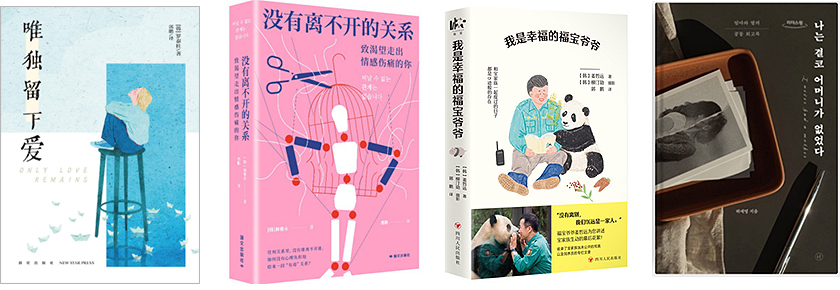
Through the process of translation, I’ve come to think of Korean literature as possessing a delicate and brilliant diversity, like a hydrangea. The emotional resonance conveyed by poet Ra Taejoo’s poetry reveals the multifaceted nature of love, while writer Kim Ae-ran’s intricate descriptions capture, like hydrangeas, the conflicts and growth processes of women contemplating between tradition and modernity. The story of zookeeper Kang Cheol-won and the giant panda Fu Bao demonstrates the profound bonds between humans and animals. In this way, the Korean culture I encountered through translation grew increasingly rich, and as both a translator and a reader, I was able to experience the deep emotional world contained within diverse literary works.
Internationally, Korea has a strong image as a producer of popular culture. The Korean Wave (Hallyu) has become such a global phenomenon that it’s been included in English dictionaries, profoundly influencing Korea’s international status and national image. However, unlike Korean films, dramas, variety shows, K-pop, and Hallyu stars, Korean authors have remained less recognized in China for quite some time.
However, author Han Kang’s receipt of the Nobel Prize in Literature in October 2024 marked a critical turning point. The Swedish Academy recognized her work for expressing “historical trauma and the fragility of human life through poetic prose.” This attested to Korea’s ability to produce outstanding achievements in the realm of serious literature, intellectual depth, and artistic expression, and broke down the prejudice that Korean culture is merely “simple mass entertainment.”
Through the process of translation, I’ve come to think of Korean literature as possessing a delicate and brilliant diversity, like a hydrangea. The emotional resonance conveyed by poet Ra Taejoo’s poetry reveals the multifaceted nature of love, while writer Kim Ae-ran’s intricate descriptions capture, like hydrangeas, the conflicts and growth processes of women contemplating between tradition and modernity. The story of zookeeper Kang Cheol-won and the giant panda Fu Bao demonstrates the profound bonds between humans and animals. In this way, the Korean culture I encountered through translation grew increasingly rich, and as both a translator and a reader, I was able to experience the deep emotional world contained within diverse literary works.
Internationally, Korea has a strong image as a producer of popular culture. The Korean Wave (Hallyu) has become such a global phenomenon that it’s been included in English dictionaries, profoundly influencing Korea’s international status and national image. However, unlike Korean films, dramas, variety shows, K-pop, and Hallyu stars, Korean authors have remained less recognized in China for quite some time.
However, author Han Kang’s receipt of the Nobel Prize in Literature in October 2024 marked a critical turning point. The Swedish Academy recognized her work for expressing “historical trauma and the fragility of human life through poetic prose.” This attested to Korea’s ability to produce outstanding achievements in the realm of serious literature, intellectual depth, and artistic expression, and broke down the prejudice that Korean culture is merely “simple mass entertainment.”
Interest in Korean literature is spreading among young people in China as well. The hashtag “Literature by Korean Women” (韓女文學) has emerged on social media platforms like Weibo, Xiaohongshu, and Douban, demonstrating that young people have already developed recognition of outstanding Korean women writers including Han Kang (The Vegetarian, The White Book), Choi Eunyoung (Bright Night), Cho Nam-joo (Kim Jiyoung, Born 1982), Shin Kyung-Sook (Please Look After Mom), and Park Wansuh.
Whether by chance or inevitability, the vision of becoming one of the “Global Top 5 Cultural Powerhouses,” proposed by President Lee Jae Myung during his presidential campaign, has largely come to fruition. One notable phenomenon in Korea’s book market is the active participation of ordinary people in writing. Beyond professional and freelance writers, the non-fiction genre has expanded creative agency to the general public, leading to the emergence of a massive “non-elite writer collective.” This trend of “nationwide writing” has become an important characteristic of Korea’s cultural ecosystem.
I’ve been translating Korean literary works related to feminism since 2022, including Ha Jae-young’s non-fiction work I Never Had a Mother (Naneun gyeolko eomeoni ga opseotda). This book is a joint memoir that reinterprets the author’s mother’s life and her own story from a feminist perspective. When readers shared reviews praising my “ability to translate the delicate emotions and writing style unique to Korean authors,” I felt great fulfillment as a translator. As a male translator, I came to understand how important it is to convey the pain and resistance that modern women experience within gender, society, and power structures through women writers’ refined language and social insight, and why it’s essential to address East Asian family structures and women’s dilemmas. The more I translated non-fiction works, the more firmly I came to believe that “literature is the study of humanity.”
Both domestically and internationally, non-fiction works and their influence penetrate deeply into people’s daily lives, helping to reconstruct how people view the world, promoting innovation, and leading the flow of change. Non-fiction works also serve as important mediators of a nation’s image, conveying multiple aspects of a national image through the depiction and presentation of a country’s history, culture, and geography. Furthermore, non-fiction works help modern people escape “information cocoons” to more deeply understand the real world, while offering a pathway for ordinary people and various minorities to voluntarily express themselves and enter the public sphere.
Therefore, at the national level, the combining of industries such as translation, publishing, and cultural promotion contribute significantly to Korea’s national image formation. This could include exporting excellent non-elite writers’ works abroad, optimizing domestic and international translator networks, and building a new media international discourse dissemination system through high-level vertical cooperation structures.
I believe that Korean literature will become a crucial foundation for spreading Korea’s national image worldwide and establish itself as a pivotal element of Hallyu culture more broadly. Furthermore, Korean literature has the potential to become an avenue for deeper exploration or more serious engagement within the Hallyu fandom.
However, as with all cultural phenomena, remaining at the level of superficial trends makes it difficult to achieve true beauty and sustainable influence. The appeal and vitality of culture ultimately derive from depth. Therefore, vertical deepening—delving into the core of humanistic spirit, values, historical reflection, and artistic experimentation—is an essential choice for maintaining Hallyu’s vitality and securing sustainable influence.
For sustainable Hallyu dissemination, Korea must effectively utilize both the emerging influence of its literature within “New Hallyu” and the enthusiasm of its established fandom. Adapting excellent literary works for film and creating organic connections with related K-content will be essential bridges. Above all, for Korean culture to secure sustainable competitiveness in the global market, I believe the most important task is building a multilayered and vibrant cultural ecosystem—one that balances popular accessibility with intellectual depth, sensory enjoyment with spiritual exploration, and infuses the Korean Wave with spiritual and artistic substance.
Whether by chance or inevitability, the vision of becoming one of the “Global Top 5 Cultural Powerhouses,” proposed by President Lee Jae Myung during his presidential campaign, has largely come to fruition. One notable phenomenon in Korea’s book market is the active participation of ordinary people in writing. Beyond professional and freelance writers, the non-fiction genre has expanded creative agency to the general public, leading to the emergence of a massive “non-elite writer collective.” This trend of “nationwide writing” has become an important characteristic of Korea’s cultural ecosystem.
I’ve been translating Korean literary works related to feminism since 2022, including Ha Jae-young’s non-fiction work I Never Had a Mother (Naneun gyeolko eomeoni ga opseotda). This book is a joint memoir that reinterprets the author’s mother’s life and her own story from a feminist perspective. When readers shared reviews praising my “ability to translate the delicate emotions and writing style unique to Korean authors,” I felt great fulfillment as a translator. As a male translator, I came to understand how important it is to convey the pain and resistance that modern women experience within gender, society, and power structures through women writers’ refined language and social insight, and why it’s essential to address East Asian family structures and women’s dilemmas. The more I translated non-fiction works, the more firmly I came to believe that “literature is the study of humanity.”
Both domestically and internationally, non-fiction works and their influence penetrate deeply into people’s daily lives, helping to reconstruct how people view the world, promoting innovation, and leading the flow of change. Non-fiction works also serve as important mediators of a nation’s image, conveying multiple aspects of a national image through the depiction and presentation of a country’s history, culture, and geography. Furthermore, non-fiction works help modern people escape “information cocoons” to more deeply understand the real world, while offering a pathway for ordinary people and various minorities to voluntarily express themselves and enter the public sphere.
Therefore, at the national level, the combining of industries such as translation, publishing, and cultural promotion contribute significantly to Korea’s national image formation. This could include exporting excellent non-elite writers’ works abroad, optimizing domestic and international translator networks, and building a new media international discourse dissemination system through high-level vertical cooperation structures.
I believe that Korean literature will become a crucial foundation for spreading Korea’s national image worldwide and establish itself as a pivotal element of Hallyu culture more broadly. Furthermore, Korean literature has the potential to become an avenue for deeper exploration or more serious engagement within the Hallyu fandom.
However, as with all cultural phenomena, remaining at the level of superficial trends makes it difficult to achieve true beauty and sustainable influence. The appeal and vitality of culture ultimately derive from depth. Therefore, vertical deepening—delving into the core of humanistic spirit, values, historical reflection, and artistic experimentation—is an essential choice for maintaining Hallyu’s vitality and securing sustainable influence.
For sustainable Hallyu dissemination, Korea must effectively utilize both the emerging influence of its literature within “New Hallyu” and the enthusiasm of its established fandom. Adapting excellent literary works for film and creating organic connections with related K-content will be essential bridges. Above all, for Korean culture to secure sustainable competitiveness in the global market, I believe the most important task is building a multilayered and vibrant cultural ecosystem—one that balances popular accessibility with intellectual depth, sensory enjoyment with spiritual exploration, and infuses the Korean Wave with spiritual and artistic substance.
[Encouragement Prize]
Guo Peng
(Country of Activity: China)

Guo Peng
(Country of Activity: China)
