


Column
Developing Textbook Materials on Korean History and Culture for School Students in Vietnam
Over the past three decades, Vietnam and the Republic of Korea have established one of the most dynamic and comprehensive partnerships in East Asia. Since the establishment of diplomatic relations in 1992, cooperation between the two countries has expanded in almost every field, including education, culture, tourism, and people-to-people exchange. As a result, Korea has become not only an important economic partner for Vietnam but also a powerful cultural presence, especially among younger generations.
In this context, I was honored to participate in the “Development of Educational Materials and Activities for Understanding Korea Support Project” funded by the Academy of Korean Studies. Through this opportunity, my team and I undertook a project titled “Developing Textbook Materials on Korean History and Culture for School Students in Vietnam”. The purpose was to create a systematic, age-appropriate set of textbooks that help Vietnamese students understand Korean history, traditions, and cultural values in a deeper and more meaningful way.
These developments demonstrate that the Korea–Vietnam relationship extends far beyond economic cooperation, encompassing education, migration, multicultural families, and future generations. In this context, the development of structured, accurate, and culturally rich educational materials on Korean history and culture has become more important than ever.
- Questions and Answers about Korean History and Culture (for Elementary School Students)
- Questions and Answers about Korean History and Culture (for Middle School Students)
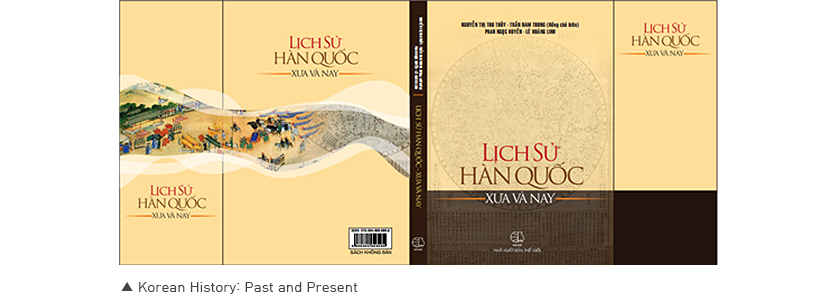
- Korean History: Past and Present
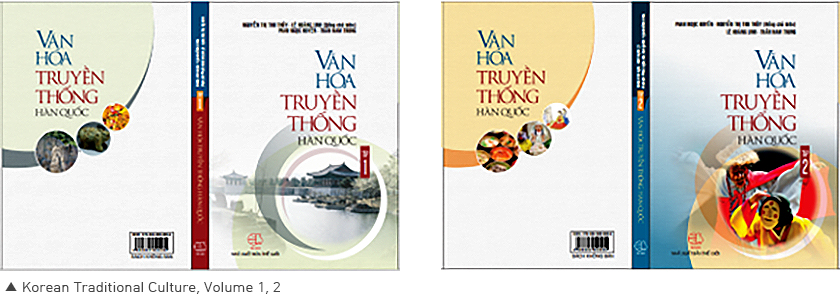
- Korean Traditional Culture, Volume 1, 2
In this context, I was honored to participate in the “Development of Educational Materials and Activities for Understanding Korea Support Project” funded by the Academy of Korean Studies. Through this opportunity, my team and I undertook a project titled “Developing Textbook Materials on Korean History and Culture for School Students in Vietnam”. The purpose was to create a systematic, age-appropriate set of textbooks that help Vietnamese students understand Korean history, traditions, and cultural values in a deeper and more meaningful way.
Why this project matters now
In Vietnam, Korean language education has expanded significantly in recent years, reflecting Korea’s role as a major economic and social partner with a strong presence of Korean enterprises and communities across the country. This close engagement, together with the steadily increasing number of Vietnamese students pursuing education in Korea, underscores the growing need for deeper cultural understanding between the two societies.These developments demonstrate that the Korea–Vietnam relationship extends far beyond economic cooperation, encompassing education, migration, multicultural families, and future generations. In this context, the development of structured, accurate, and culturally rich educational materials on Korean history and culture has become more important than ever.
What we developed: A five-volume textbook series
Under the Understanding Korea grant, our team designed and completed a five-volume textbook series on Korean history and culture, tailored for different age levels:- Questions and Answers about Korean History and Culture (for Elementary School Students)
- Questions and Answers about Korean History and Culture (for Middle School Students)
- Korean History: Past and Present
- Korean Traditional Culture, Volume 1, 2
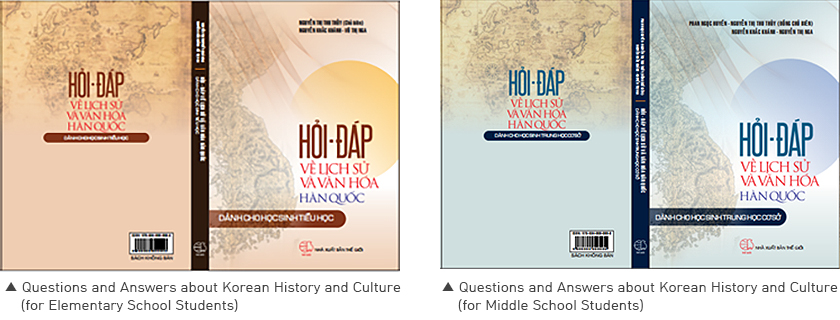
The first two volumes use a question-and-answer format to engage younger learners, introducing core themes of Korean history and culture, including major dynasties, notable figures, hanok architecture, traditional clothing and food, festivals, national symbols, and key heritage sites.
The third volume, Korean History: Past and Present, is designed for for high school students and offers a thematic overview of Korea’s historical development, from prehistoric times and early states to the Japanese colonial period, the independence movement, the formation of the Republic of Korea, the era of military rule, and Korea’s modern global role.
The final two volumes focus on traditional culture, covering historical relics, prominent sites, customs, beliefs, festivals, literature, music, painting, and other arts, thereby presenting Korea as both a modern nation and a civilization grounded in a rich cultural heritage.
Throughout development, we prioritized historical accuracy, clarity, and cultural sensitivity, and aligned all content with the Vietnamese school curriculum, particularly in history and geography, to ensure relevance and accessibility.
Most importantly, the project has established a sustainable foundation for future educational efforts. The textbooks can be used over many years, converted into digital formats, and incorporated into teacher-training programmes and intercultural initiatives. As social and educational ties between Vietnam and Korea continue to grow, these materials will maintain their relevance and, ideally, inspire further collaborative initiatives. This project demonstrates that education remains one of the most powerful instruments for fostering enduring mutual understanding and friendship between nations.
I would like to express my profound appreciation to the Academy of Korean Studies and the Center for International Affairs (CEFIA) for their generous support, guidance, and trust in our work. Their commitment made it possible for us to transform an initial project concept into a meaningful and tangible contribution to cross-cultural understanding and education. I hope the Understanding Korea initiative continues to inspire educators and learners globally, thereby strengthening Korea’s connection with communities worldwide through knowledge, respect, and shared learning.
The third volume, Korean History: Past and Present, is designed for for high school students and offers a thematic overview of Korea’s historical development, from prehistoric times and early states to the Japanese colonial period, the independence movement, the formation of the Republic of Korea, the era of military rule, and Korea’s modern global role.
The final two volumes focus on traditional culture, covering historical relics, prominent sites, customs, beliefs, festivals, literature, music, painting, and other arts, thereby presenting Korea as both a modern nation and a civilization grounded in a rich cultural heritage.
Throughout development, we prioritized historical accuracy, clarity, and cultural sensitivity, and aligned all content with the Vietnamese school curriculum, particularly in history and geography, to ensure relevance and accessibility.
Sharing results: From classrooms to communities
After publication, we disseminated the materials through three primary channels: donations to schools, universities, and Korea-related institutions; an academic workshop to introduce the textbooks and provide guidance on their classroom application; and commercial distribution through bookstores and online platforms to ensure broad public access. As a result of these efforts, the materials now function not only as valuable classroom resources but also as meaningful bridges of cultural exchange between Vietnam and Korea.Reflections and future directions
Participating in the Understanding Korea Support Project has been one of the most significant and rewarding experiences of my professional career. Beyond the scope of academic publishing, the project allowed me to serve as a cultural mediator, helping Vietnamese students understand Korea not only through the lens of contemporary pop culture, but also as a nation with deep historical roots, rich traditions, and an evolving cultural identity.Most importantly, the project has established a sustainable foundation for future educational efforts. The textbooks can be used over many years, converted into digital formats, and incorporated into teacher-training programmes and intercultural initiatives. As social and educational ties between Vietnam and Korea continue to grow, these materials will maintain their relevance and, ideally, inspire further collaborative initiatives. This project demonstrates that education remains one of the most powerful instruments for fostering enduring mutual understanding and friendship between nations.
I would like to express my profound appreciation to the Academy of Korean Studies and the Center for International Affairs (CEFIA) for their generous support, guidance, and trust in our work. Their commitment made it possible for us to transform an initial project concept into a meaningful and tangible contribution to cross-cultural understanding and education. I hope the Understanding Korea initiative continues to inspire educators and learners globally, thereby strengthening Korea’s connection with communities worldwide through knowledge, respect, and shared learning.

