


Culture Focus
Education in Korea - 1
Korean education system after 1945
Education plays a crucial role in both shaping individuals and advancing South Korea as a nation. Renowned for its rigor, the Korean education system consistently ranks high in global assessments like PISA, a reflection of its effectiveness. This robust educational framework, particularly its focus on STEM fields, has been key to South Korea’s transformation from a war-torn country to a leading global economy and a driving force of its technological innovation and industrial success.
Following the Korean War (1950–1953), Korea achieved remarkable economic growth in a relatively short period of time. The driving force making possible such remarkable growth is often said to be people’s enthusiasm for education. During Korea’s rapid industrialization, a well-educated and trained workforce contributed to the development of a country that had sparse natural resources. Korea grew to become one of the major donors of Official Development Assistance (ODA) among OECD countries.
However, this strong emphasis on academic achievement has created challenges, including a culture of intense competition that places great pressures on students and families. Many young children are heavily reliant on private tutoring centers, called hagwon, to raise their test scores, while little attention is being given to stress, mental health issues, and the development of practical skills. In response to this, Korea has introduced reforms to address these issues, aiming to reduce reliance on private education, promote balanced learning, and integrate creativity, critical thinking, and global citizenship into curriculum.
The new government issued the Education Act of 1949, which included a new school system consisting of six years of primary school, three years of middle school, three years of high school, and two or four years of college or university. Schooling is mandatory for all Korean children from primary school through middle school. High schools are divided into two types: general (academic) and vocational. The institutions of higher education with four-year undergraduate programs are classified into four categories: (a) colleges and universities; (b) teacher’s colleges and colleges of education; (c) air and correspondence universities and open universities; and (d) theological colleges, seminaries, and others.
From the 1960s to the 1990s, Korea experienced a significant expansion of education at all levels, from primary to higher education. Following national liberation in August 1945, secondary and higher education in Korea were seen as elite opportunities, accessible only to those who could pass highly competitive entrance exams. As a result, the education system at the time did not ensure equal access for everyone.
However, in the 1960s, a series of educational reforms by the government greatly expanded access to education, initiating widespread secondary schooling and promoting higher education. This period marked significant quantitative growth in Korea’s education sector, as evidenced by a sharp increase in both the number of schools and students.
For example, the proportion of matriculating school-aged children (ages 6 to 11 for elementary, 12 to 17 for secondary, and 18 to 21 for higher education) grew substantially. By 1970, elementary school attendance had reached 100%, while secondary school attendance saw a rapid increase following the abolition of entrance exams for middle schools in 1969.
A key milestone in this expansion was the introduction of free compulsory education. The Ministry of Education (MOE) implemented a six-year plan for free primary education in 1954, achieving a 95.4% enrollment rate by 1959. Although this initiative was initially drafted in 1949, its implementation was delayed due to the outbreak of the Korean War in 1950. Funding for the plan came from the 1958 Education Tax Act and international aid including UNESCO-UNKRA, American Education Missions, and International Cooperation Administration of the USA, and it contributed greatly to the rapid growth of education in Korea.
Following the Korean War (1950–1953), Korea achieved remarkable economic growth in a relatively short period of time. The driving force making possible such remarkable growth is often said to be people’s enthusiasm for education. During Korea’s rapid industrialization, a well-educated and trained workforce contributed to the development of a country that had sparse natural resources. Korea grew to become one of the major donors of Official Development Assistance (ODA) among OECD countries.
However, this strong emphasis on academic achievement has created challenges, including a culture of intense competition that places great pressures on students and families. Many young children are heavily reliant on private tutoring centers, called hagwon, to raise their test scores, while little attention is being given to stress, mental health issues, and the development of practical skills. In response to this, Korea has introduced reforms to address these issues, aiming to reduce reliance on private education, promote balanced learning, and integrate creativity, critical thinking, and global citizenship into curriculum.
The South Korean Education System after 1945
Following liberation from Japanese colonial rule in 1945, education was one of the most urgent issues facing Korean nation-building. The educational authorities had to seek out and hire teachers and officials to replace their colonial predecessors. Moreover, they had to publish and distribute new textbooks to replace those used during the period of Japanese occupation. They established new schools and expanded the number of classrooms in order to cope with the high demand for public schooling. Accordingly, following its formation in 1948, the new government of South Korea rearranged the institutional settings in order to establish an educational system.The new government issued the Education Act of 1949, which included a new school system consisting of six years of primary school, three years of middle school, three years of high school, and two or four years of college or university. Schooling is mandatory for all Korean children from primary school through middle school. High schools are divided into two types: general (academic) and vocational. The institutions of higher education with four-year undergraduate programs are classified into four categories: (a) colleges and universities; (b) teacher’s colleges and colleges of education; (c) air and correspondence universities and open universities; and (d) theological colleges, seminaries, and others.
The Expansion of Schooling in Korea
Over the past six decades, Korean education has achieved significant growth both in quantity and quality, leading to a substantial expansion of the nation’s school system. The number of schools at all educational levels has steadily increased over the years. However, with the continuous decline in the population of school-aged children, this upward trend has recently come to a halt. It is now expected that the number of schools will gradually decrease.From the 1960s to the 1990s, Korea experienced a significant expansion of education at all levels, from primary to higher education. Following national liberation in August 1945, secondary and higher education in Korea were seen as elite opportunities, accessible only to those who could pass highly competitive entrance exams. As a result, the education system at the time did not ensure equal access for everyone.
However, in the 1960s, a series of educational reforms by the government greatly expanded access to education, initiating widespread secondary schooling and promoting higher education. This period marked significant quantitative growth in Korea’s education sector, as evidenced by a sharp increase in both the number of schools and students.
For example, the proportion of matriculating school-aged children (ages 6 to 11 for elementary, 12 to 17 for secondary, and 18 to 21 for higher education) grew substantially. By 1970, elementary school attendance had reached 100%, while secondary school attendance saw a rapid increase following the abolition of entrance exams for middle schools in 1969.
A key milestone in this expansion was the introduction of free compulsory education. The Ministry of Education (MOE) implemented a six-year plan for free primary education in 1954, achieving a 95.4% enrollment rate by 1959. Although this initiative was initially drafted in 1949, its implementation was delayed due to the outbreak of the Korean War in 1950. Funding for the plan came from the 1958 Education Tax Act and international aid including UNESCO-UNKRA, American Education Missions, and International Cooperation Administration of the USA, and it contributed greatly to the rapid growth of education in Korea.
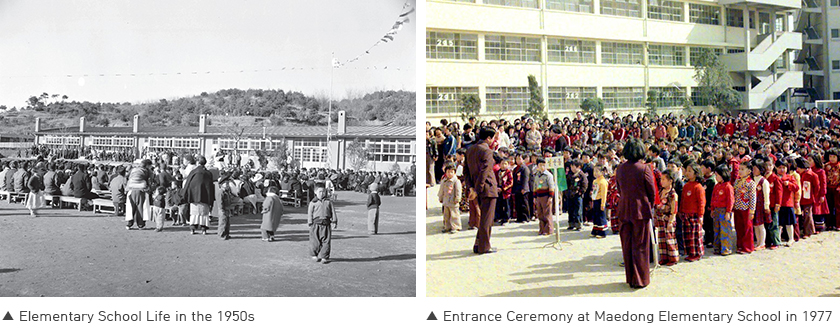
Table 1 shows a dramatic increase in the percentage of school attendance in all levels of schooling. The number of schools generally increased until 1985, peaking at 6,519, then decreased slightly before stabilizing in recent years. There was a significant increase in the number of students from 1945 to 1975, peaking at 5,599,074 in 1975. However, the student population decreased steadily afterward, reaching its lowest level in 2023.
In general, the lower the student teacher ratio, the better the quality of education. South Korea has one of the highest studentteacher ratios in the world. In 1945, that ratio was 105.1 students per 1 teacher, and by 1975, it had decreased to 51.8, still a very high figure. However, the ratio has seen further and steady decline since then, reaching 13.3 in 2023, which is close to the OECD average.
Secondary education in South Korea had expanded at a rapid rate, but unlike the case of primary education, this was as much the result of private as government initiatives, especially during South Korea’s first years. Half of all the new secondary schools opened in the 1950s were private schools. Indeed, the task of the Korean government was as much to control the growth of secondary and higher education as it was to promote it.
South Korea has seen a consistent increase in the number of middle schools over time, from 297 schools in 1945 to 3,265 in 2023. This reflects an expansion of educational infrastructure to accommodate more students. The number of middle school students increased significantly from 1945, peaking in 1985 at 2,782,173. Since that year, there has been a steady decline, with enrollment dropping to 1,326,831 students by 2023. The studentto-teacher ratio has significantly decreased over the years. In 1945, it was a high 65.2 students per teacher. By 2023, this ratio had dropped to 11.6, indicating smaller class sizes and likely improved teacher attention per student.
The growth in the number of schools reflects increased investment in middle school education. The declining student population since the 1980s might suggest demographic changes, such as declining birth rates. The reduced student-to-teacher ratio highlights improvements in educational quality, likely due to policy changes and an emphasis on personalized learning.
The establishment of compulsory elementary education created new demands for secondary education. In 1969, the middle school entrance examination policy was abolished, making lower secondary education partially universal. By the mid-1980s, efforts were being made to make lower secondary education compulsory, something fully achieved by 2005.
While elementary and middle school operations stabilized, competition for admission into selective and prestigious high schools intensified, reflecting a growing demand for higher-quality secondary education. To address this, the High School Equalization Policy was introduced in 1975. This policy helped standardize upper secondary education and improve its overall quality.
However, during the development of the national educational system, the government faced a shortage of public funds to establish a comprehensive secondary education system. To overcome this challenge, the government relied heavily on private investors to expand secondary education. While government resources were prioritized for elementary education, private investors funded the construction of middle and high schools, significantly contributing to the growth of the secondary education system.
As table 3 shows, the number of high schools in South Korea increased steadily from 701 schools in 1965 to 2,379 in 2023. This growth reflects an expansion in the educational system to accommodate a growing student population. In addition, the high school student population increased rapidly in the 1970s and 1980s, peaking at 2,152,802 in 1985. After 1985, there was a decline in high school student numbers, reaching 1,278,269 in 2023. In terms of quality of education, the high school studentto-teacher ratio initially hovered around 35.9–37.9 from 1965 to 1985 but there was a steady decline starting from 1995. By 2023, it had decreased further to 9.8, indicating significant improvement in the average class size.
The increase in the number of high schools aligns with the rising demand for high school education, likely driven by population growth. The sharp rise in student numbers between 1965 and 1985 indicates a period of significant growth in the youth population or greater high school matriculation. The decline in the number of students after the 1980s, coupled with a substantial reduction in student-to-teacher ratios, suggests demographic shifts (e.g., smaller cohorts of students) and improvements in educational practices and infrastructure, possibly reflecting a move toward smaller class sizes and better teacher availability per student.
In general, the lower the student teacher ratio, the better the quality of education. South Korea has one of the highest studentteacher ratios in the world. In 1945, that ratio was 105.1 students per 1 teacher, and by 1975, it had decreased to 51.8, still a very high figure. However, the ratio has seen further and steady decline since then, reaching 13.3 in 2023, which is close to the OECD average.
Secondary education in South Korea had expanded at a rapid rate, but unlike the case of primary education, this was as much the result of private as government initiatives, especially during South Korea’s first years. Half of all the new secondary schools opened in the 1950s were private schools. Indeed, the task of the Korean government was as much to control the growth of secondary and higher education as it was to promote it.
South Korea has seen a consistent increase in the number of middle schools over time, from 297 schools in 1945 to 3,265 in 2023. This reflects an expansion of educational infrastructure to accommodate more students. The number of middle school students increased significantly from 1945, peaking in 1985 at 2,782,173. Since that year, there has been a steady decline, with enrollment dropping to 1,326,831 students by 2023. The studentto-teacher ratio has significantly decreased over the years. In 1945, it was a high 65.2 students per teacher. By 2023, this ratio had dropped to 11.6, indicating smaller class sizes and likely improved teacher attention per student.
The growth in the number of schools reflects increased investment in middle school education. The declining student population since the 1980s might suggest demographic changes, such as declining birth rates. The reduced student-to-teacher ratio highlights improvements in educational quality, likely due to policy changes and an emphasis on personalized learning.
The establishment of compulsory elementary education created new demands for secondary education. In 1969, the middle school entrance examination policy was abolished, making lower secondary education partially universal. By the mid-1980s, efforts were being made to make lower secondary education compulsory, something fully achieved by 2005.
While elementary and middle school operations stabilized, competition for admission into selective and prestigious high schools intensified, reflecting a growing demand for higher-quality secondary education. To address this, the High School Equalization Policy was introduced in 1975. This policy helped standardize upper secondary education and improve its overall quality.
However, during the development of the national educational system, the government faced a shortage of public funds to establish a comprehensive secondary education system. To overcome this challenge, the government relied heavily on private investors to expand secondary education. While government resources were prioritized for elementary education, private investors funded the construction of middle and high schools, significantly contributing to the growth of the secondary education system.
As table 3 shows, the number of high schools in South Korea increased steadily from 701 schools in 1965 to 2,379 in 2023. This growth reflects an expansion in the educational system to accommodate a growing student population. In addition, the high school student population increased rapidly in the 1970s and 1980s, peaking at 2,152,802 in 1985. After 1985, there was a decline in high school student numbers, reaching 1,278,269 in 2023. In terms of quality of education, the high school studentto-teacher ratio initially hovered around 35.9–37.9 from 1965 to 1985 but there was a steady decline starting from 1995. By 2023, it had decreased further to 9.8, indicating significant improvement in the average class size.
The increase in the number of high schools aligns with the rising demand for high school education, likely driven by population growth. The sharp rise in student numbers between 1965 and 1985 indicates a period of significant growth in the youth population or greater high school matriculation. The decline in the number of students after the 1980s, coupled with a substantial reduction in student-to-teacher ratios, suggests demographic shifts (e.g., smaller cohorts of students) and improvements in educational practices and infrastructure, possibly reflecting a move toward smaller class sizes and better teacher availability per student.
InfoKOREA 2025
InfoKOREA is a magazine that introduces Korea to readers overseas, including teachers, textbook developers and other educators. The magazine offers the latest statistics on the Republic of Korea and articles that focus on Korean culture, society and history, which can be used as a reference source for textbook writers and editors and as materials for teachers to prepare for class. The theme of the 2025 issue was 'Education in Korea'.
InfoKOREA is a magazine that introduces Korea to readers overseas, including teachers, textbook developers and other educators. The magazine offers the latest statistics on the Republic of Korea and articles that focus on Korean culture, society and history, which can be used as a reference source for textbook writers and editors and as materials for teachers to prepare for class. The theme of the 2025 issue was 'Education in Korea'.

