Content on the Korean War titled “Casos de conflictos en el contexto de la Guerra Fría: la guerra de Corea (Examples of Conflict During the Cold War: The Korean War)” has been added to the 9th-grade El Salvador textbook Ciudadanía y Valores 9 (Citizenship and Values 9). This accomplishment was achieved through continuous exchanges, including an invitational training program in 2024, participation in local seminars abroad, and cooperation with overseas diplomatic missions.
- Enhanced Coverage of the Korean War| Includes the background, key characteristics, and outcome of the war.
- Comparative Maps| Maps comparing the shift from the pre-war border along the 38th parallel to the post-war Armistice Line.
- Learning Activities Using Testimonies| Exploring the experiences and impacts of the war through the testimony of a person who was young at the time and lived through the Korean War.
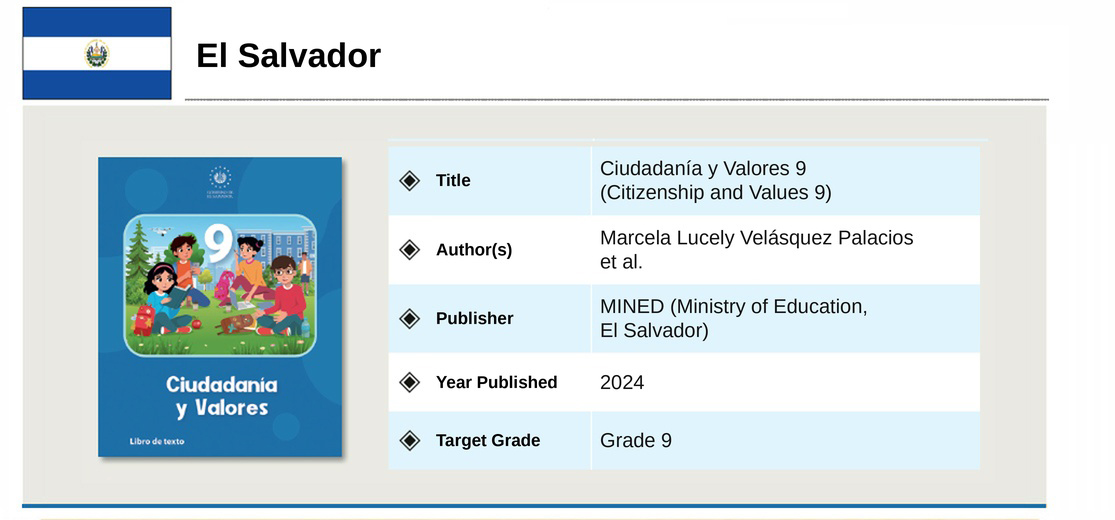
New Section on the Korean War as an Example of Cold War Conflict
This section covers the Korean War as one of the major conflicts of the Cold War era. It explains the process leading to the establishment of the North and South Korean governments in 1948 following liberation from Japanese colonial rule in 1945; the war that began with North Korea’s invasion of the South in 1950; the intervention of neighboring countries and UN forces; and the situation following the armistice. In particular, the text highlights the Korean Peninsula’s geopolitical location and the involvement of the Eastern and Western blocs as key characteristics of the war, structuring the content to enable readers to understand the Korean War within the context of international confrontation.
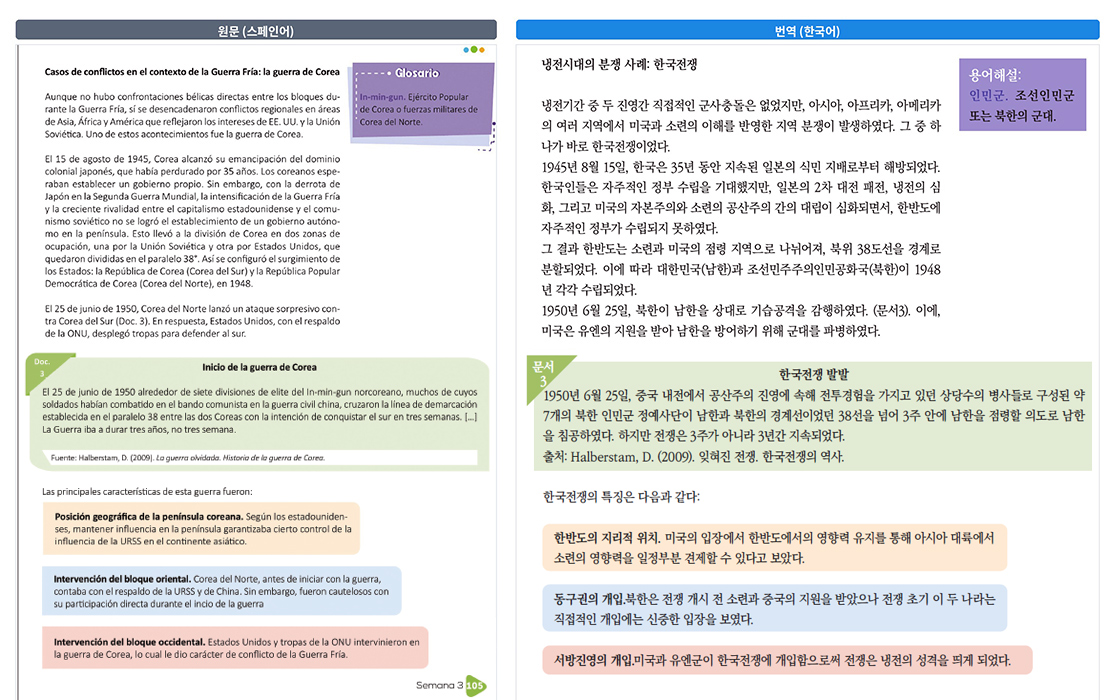
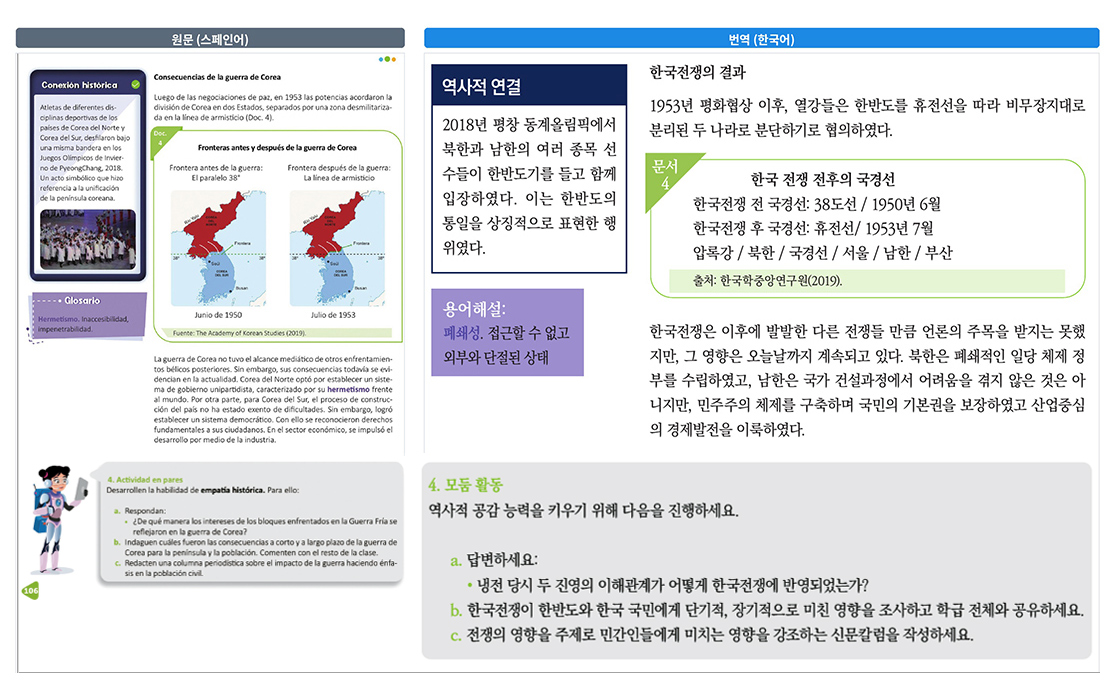
Comparison of the Pre- and Post-War Periods Using Data Provided by the AKS
In the section covering the outcomes of the war, a map comparing changes in the border between North and South Korea before and after the Korean War—based on data provided by the AKS—is included. By comparing the 38th parallel in June 1950 with the Armistice Line in July 1953, students can accurately understand the changes in the Korean Peninsula’s borders before and after the Korean War, rather than mistakenly viewing the 38th parallel as the current border between North and South Korea. The section also introduces the establishment of South Korea’s democratic system and its economic development, and the “Historical Connections” section covers the joint entry of North and South Korean athletes at the 2018 PyeongChang Winter Olympics.
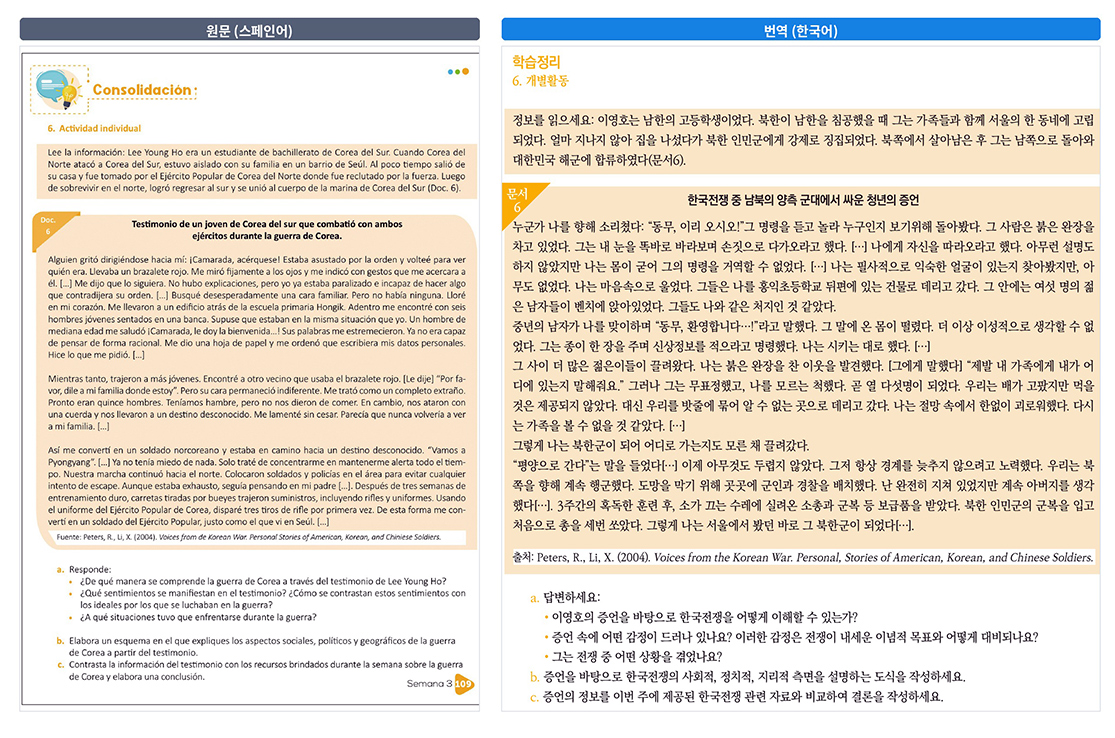
Learning About War Through a Young Man’s Testimony
The individual activities in the lesson summary include the testimony of Lee Young Ho, who was a high school student in South Korea when the Korean War broke out. He was forcibly conscripted into the North Korean People’s Army but later joined the Republic of Korea Armed Forces. Students can read the testimony to examine the experiences and emotions of someone who lived through the war and reflect on how an individual’s life was transformed amid the conflict and ideological confrontation. Furthermore, based on the testimony, the material is structured to help students summarize the social, political, and geographical aspects of the Korean War, enabling them to gain a comprehensive understanding of the war’s impact on both individuals and society.
- Understanding the Outbreak, Course, and Outcome of the Korean War| By examining the background and key characteristics of the Korean War—which broke out amid international tensions during the Cold War—as well as the situation following the armistice, students will gain an understanding of the relationship between the war and the division of the Korean Peninsula.
- Identifying Changes Through Maps| By comparing maps showing border changes before and after the war, students can identify the differences between the 38th parallel and the Armistice Line and understand the impact the war had on the Korean Peninsula’s spatial boundaries.
- Understanding Individual Experiences Through Historical Testimonies| Through the testimony of a young person who lived through the Korean War, students will examine the impact the war had on individuals’ lives and emotions and develop the ability to understand historical events from diverse perspectives.